Platti moved to Würzburg, Germany, in 1722 to work for the Prince-Bishop, and spent the rest of his life there as a composer, instrumentalist, and tenor.
Critical Reception
Platti first gained widespread attention for his keyboard music, specifically his 'VI. Sonates pour le clavessin sur le goût italien' published in 1742.
Composer Biography
Giovanni Benedetto Platti, an Italian composer, spent his early years in Venice studying with Francesco Gasparini and potentially Antonio Vivaldi.
Composer's Artistic Vision
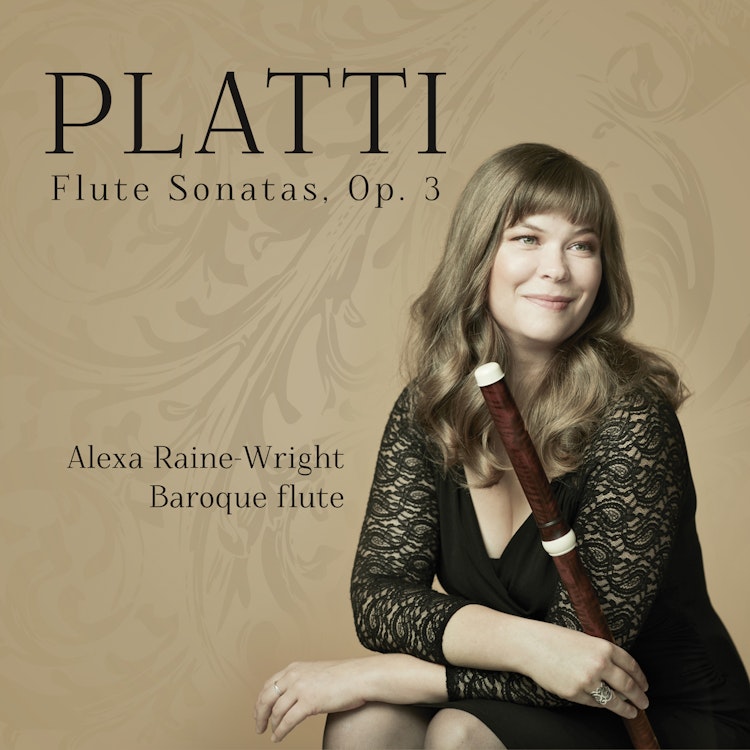
Platti's flute sonatas reveal a composer with one foot firmly in the Baroque style and the other pointing towards the Classical style.
Compositional Technique
Platti's flute sonatas are an important link in the emergence of sonata form, showing signs of an emerging tripartite structure and a rhetorical strategy of modulation.
Composer's Artistic Vision
Some critics have likened Platti's music more to that of his German contemporaries, like Bach, than his Italian compatriots, suggesting he diverged from the 'Italian taste' at some point.
Interpretation
The performers on this album use a variety of basso continuo combinations, including harpsichord, archlute, guitar, and cello, to highlight the wealth of expressions in Platti's sonatas.
You might also enjoy...
Bach & Telemann
Chamber Music (English 17Th Century) (The Division Flute)