Poulenc was part of the group Les Six, a collective of young composers including Darius Milhaud and Arthur Honegger, led by Erik Satie, and was also associated with literary figures like Jean Cocteau.
Composition History
Poulenc was commissioned to write the ballet Les Biches in his early twenties by Serge Diaghilev, the famous impresario of the Ballets Russes.
Composer Biography
Francis Poulenc, born in Paris in 1899, grew up in an upper-class family and dreamed of becoming a composer from an early age.
Composer's Artistic Vision
Music critic Claude Rostand described Poulenc's personality and music as embodying traits of both 'the monk' (moine) and 'the rogue' (voyou), reflecting his blend of high artistic standards and a love for frivolity.
Compositional Technique
In the Stabat Mater, Poulenc alludes to earlier periods, with the 'Fac ut portem' movement sounding like a Baroque saraband and 'Fac ut ardeat' reminiscent of vocal polyphony.
Composition History
The title Les Biches, literally 'the does,' also carries the double meaning of 'loose girls,' reflecting the ballet's playfully erotic plot.
Composition History
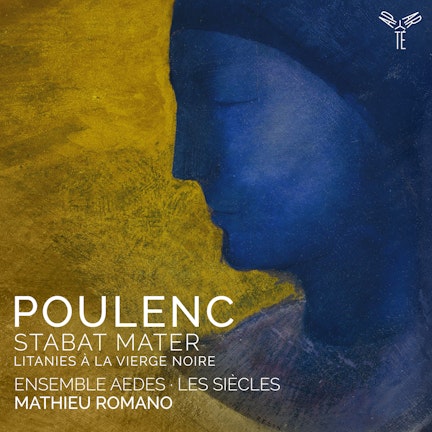
Poulenc composed the Stabat Mater following the death of his friend, the painter Christian Bérard, initially considering a requiem but finding the Stabat Mater text more fitting for an intercessory prayer.
You might also enjoy...
Szymanowski: Stabat Mater & Harnasie (Muzyka Polska, Vol. 7)