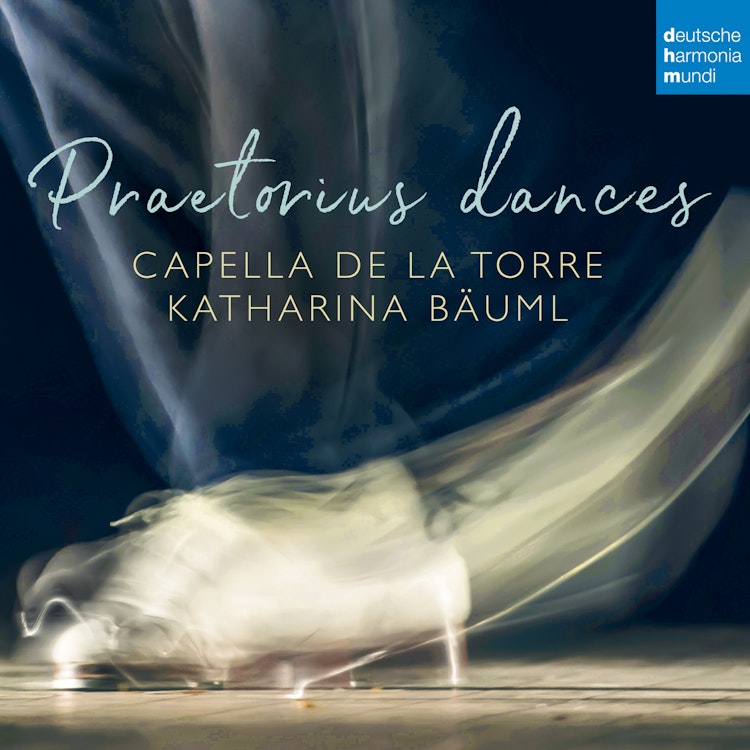
The performers on this album worked closely with dancers to create a unified whole, aiming to come closer to the historical reality of dance and music from an artistic perspective.
Recording & Production
This album, 'Praetorius dances', was the first recording Capella de la Torre was able to produce after the spring 2020 lockdown, making it a 'Capella-HOPE-Project'.
Composer's Artistic Vision
Michael Praetorius, a German composer and music theorist, made the most of his time, leaving behind a brilliant career, an impressive musical and theoretical oeuvre, and a collection of dances that continue to inspire today.
Composition History
Michael Praetorius's 'Terpsichore' (1612), from which all his works on this album are taken, is the only surviving volume of a planned series of his secular works.
Compositional Technique
Praetorius's 'Terpsichore' contains over 300 dance pieces, including many dance types discussed by Thoinot Arbeau, a French Renaissance dance master, as well as newer forms like the sarabande and bourrée.
Historical Context
Dance was an essential part of social life in the Renaissance, influencing an individual's chances of advancement and reputation in high society, especially when combined with eloquence and wit.
Composition History
Some melodies in Praetorius's 'Terpsichore' were provided by Anthoine Emeraud, a French dancing master at the Wolfenbüttel court, while others came from the French musician Pierre Francisque Caroubel.
You might also enjoy...
Beethoven, Hummel, Schubert & Weber: Sonatas and Variations for flute and piano
At Home & Abroad
Works for Flute & Piano
BACHannalia: A Celebration of 340 Years of Music
Gambensonaten 2.0 - For Cello and Accordion
Danielpour: Songs in Three Languages
Accordion Baroque
The Mystic and the Muse (Celebrating 600 Years Of Women in Music)