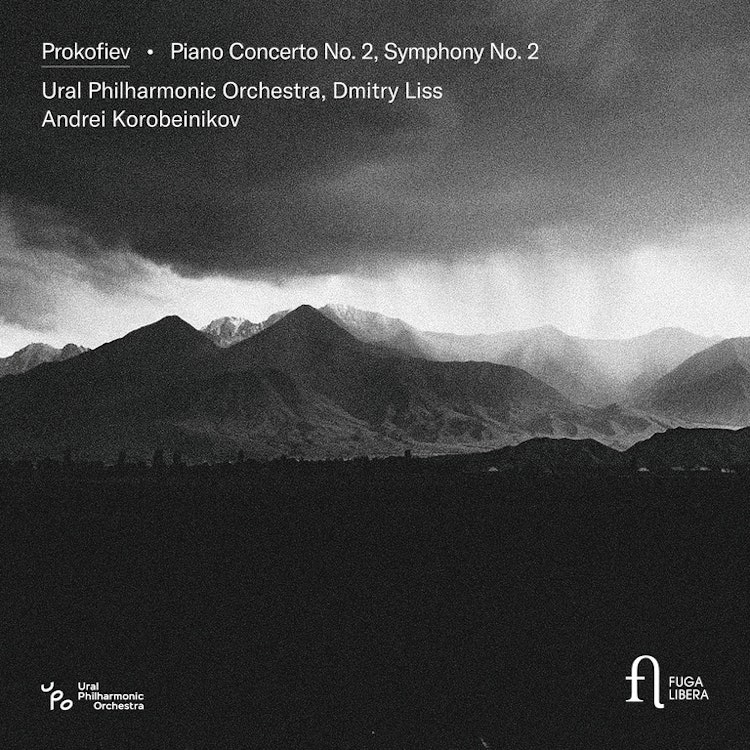
The dramatic character of Prokofiev's Piano Concerto No. 2 is partly due to its dedication to Maximilian Schmidthof, a talented pianist and close friend who died by suicide in 1913.
Composer's Artistic Vision
Prokofiev's Symphony No. 2 was forged 'from iron and steel' and aimed to express strong emotions through 'acoustic titanism' — the experience of sound as a carrier of mass, energy, and strength.
Compositional Technique
Prokofiev's Symphony No. 2 features innovative and 'barbarian' elements like multi-layered dissonances, ponderous ostinatos, extremely loud dynamics, and piercing timbres.
Composition History
The original score of Prokofiev's Piano Concerto No. 2 was lost in revolutionary Petrograd, requiring Prokofiev to re-orchestrate it from a surviving piano score in 1923.
Composer's Artistic Vision
Prokofiev's Symphony No. 2 is one of his first conceptual statements about humanity and the contemporary world, with its two movements representing a confrontation between civilization and culture.
Critical Reception
Prokofiev's Piano Concerto No. 2 caused a scandal at its 1913 premiere, with the St. Petersburg press calling it 'the debut of the Cubist and Futurist of the piano'.
Compositional Technique
Prokofiev's Piano Concerto No. 2 is comparable to Rachmaninov's Concerto No. 3 in its monumental technical challenges, even seeming 'hideously difficult and mercilessly tedious' to Prokofiev himself.
You might also enjoy...
Stenhammar: Piano Concerto No. 1 / Symphony No. 3 (Fragment of Movement I)
Krzysztof Penderecki: Piano Concerto "Resurrection" & Symphony No. 2 "Christmas" (Live)
Alexander Scriabin: Symphony No. 2, Op. 29 & Piano Concerto, Op. 20