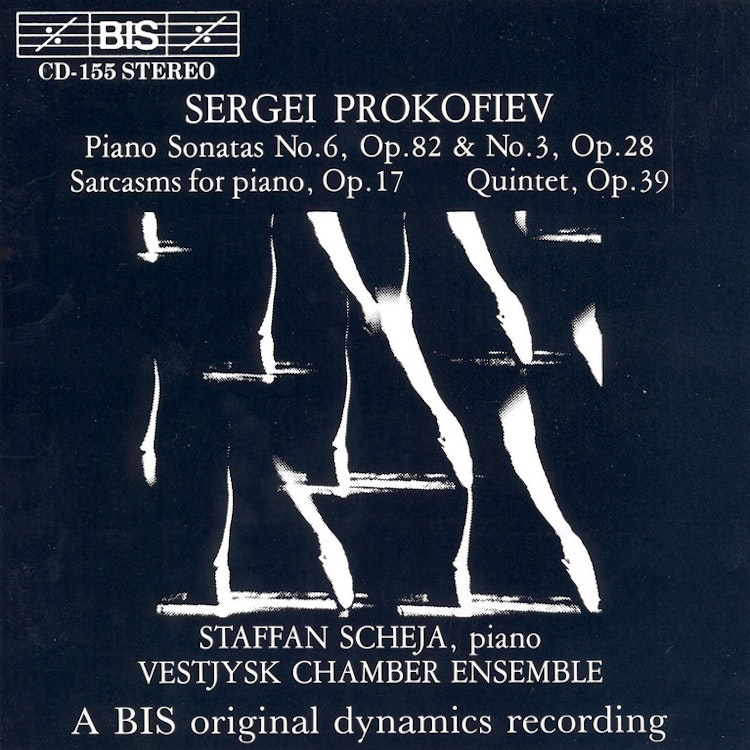
Prokofiev: Piano Sonatas Nos. 3 and 6 / Sarcasms, Op. 17 / Quintet, Op. 39
6/30/1995, 16 Tracks, 1:11:28
Featuring
Staffan Scheja
Vestjysk (West Jutland) Chamber Ensemble
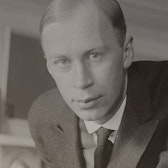
Sergei Prokofiev
Did you know?
1/7
Composer Biography
Sergei Prokofiev, a Russian composer, lived in exile in the West to avoid the young Soviet state but later returned to Russia, where he suffered insult and ignominy during the 1948 composers' inquisition.
Historical Context
After the Franco-Russian alliance in 1872, Paris became a destination for Russian artists seeking new influences, and impresario Sergei Diaghilev steered his Ballets Russes there to showcase Russian choreography, music, and stage design.
Performer Biography
Staffan Scheja, the pianist on this album, was born in 1950 and studied at the Stockholm Music Academy and the Juilliard School in New York, where he now lives.
Compositional Technique
The five pieces of Sarcasms, Op. 17, are considered the most extreme example of Prokofiev's grotesque style, contrasting fury with dream-like images and scornful melodies with deep tragedy.
Composer's Artistic Vision
Prokofiev's chameleon-like quality as a composer, with music ranging from witty and disparaging to tender and beautiful, is attributed to his dual role as a composer and a piano virtuoso.
Composition History
Prokofiev composed his Third Piano Sonata, Op. 28, in the spring of 1917, largely basing it on a youthful work he had composed in 1907.
Composition History
Prokofiev accepted an offer from Boris Romanov, a Russian dancer and choreographer, in 1924 to write music for a new ballet called 'Trapeze,' which required a small ensemble due to financial constraints.
You might also enjoy...
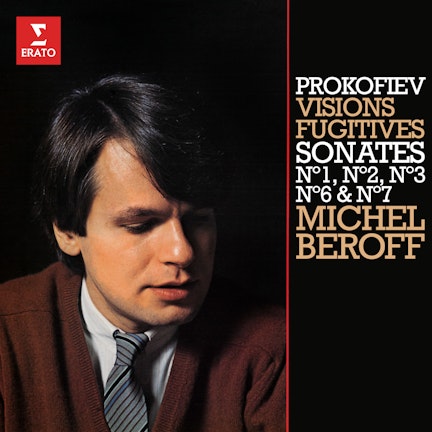
Prokofiev: Visions fugitives & Sonates pour piano Nos. 1, 2, 3, 6 & 7