The first volume of Alexander Melnikov’s cycle of Prokofiev piano sonatas was highly acclaimed, and the second volume features the Fourth, Seventh and Ninth Sonatas. The Fourth (1917) is a pensive and restrained work written after the death of a friend, while the better-known Seventh (1942) is the second of the three "War Sonatas". The Ninth (1947), Prokofiev’s final completed sonata, is dedicated to its first performer, Sviatoslav Richter.
Featuring
Alexander Melnikov
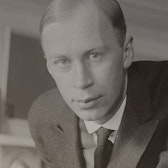
Sergei Prokofiev
Did you know?
1/7
Composition History
Prokofiev's Sonatas Nos. 3 and 4, both completed in 1917, were subtitled 'From the Old Notebooks,' indicating they were based on unfinished youthful compositions.
Composition History
Prokofiev's Seventh Sonata, Op. 83, is the central piece of his 'War Sonatas' triptych (Nos. 6, 7, and 8), composed between 1939 and 1944 after his return to the USSR.
Compositional Technique
A unique structural feature of the Ninth Sonata is that the coda of each movement introduces a few notes or bars that serve as the theme for the following movement.
Composer's Artistic Vision
For his Ninth Sonata, Prokofiev told pianist Sviatoslav Richter, "Do not think it's intended to create an effect. It's not the sort of work to raise the roof of the Grand Hall."
Composition History
The Fourth Sonata, Op. 29, is the last work Prokofiev composed before the Russian Revolution, reworking material from a 1908 sonata and symphony.
Composition History
The Ninth Sonata, Op. 103, Prokofiev's last composition for solo piano, was written for Sviatoslav Richter in 1946-1947.
Notable Performances
The Seventh Sonata, Op. 83, was composed in 1942 and immediately entered the repertoire of pianist Sviatoslav Richter, who claimed to have learned it in just four days.
You might also enjoy...
PROKOFIEV: Piano Sonatas Nos. 5, 6 and 9
Prokofiev: The Piano Sonatas Vol. 3
Prokofiev: Piano Sonatas Nos.6-8
Prokofiev: Piano Sonatas Nos. 2, 3, 5 & 9
Prokofiev: Complete Piano Sonatas
PROKOFIEV: Piano Sonatas Nos. 1, 3 and 4
Prokofiev: Piano Sonatas Nos. 1, 4, 5, 7 & 9
Prokofiev: The Complete Piano Sonatas, 4 Pieces & 4 Études