Puccini: Messa di Gloria - Verdi: Stabat Mater & Te Deum
9/6/2012, 7 Tracks, 1:14:26
Featuring
Karl Rathgeber
Bernhard Schneider
Christian Schmidt-Timmermann
Barbara Bübl
PKF - Prague Philharmonia
Chor der Hochschule für Evangelische Kirchenmusik Bayreuth
Konzertchor der Hochschule für katholische Kirchenmusik Regensburg
Giacomo Puccini
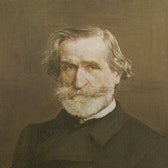
Giuseppe Verdi
Did you know?
1/7
Compositional Technique
Verdi's Te Deum uniquely begins with male voices quoting or imitating Gregorian chants, allowing for a highly contrasting and rich entry of the 'Sanctus' text.
Composer Biography
Giuseppe Verdi considered the foundation of a home for elderly musicians in need in Milan in 1899, which received all royalties from his works, to be his 'best work'.
Composition History
Puccini's Messa di Gloria, a youthful work from 1878-1880, was only rediscovered and published in 1950 by American priest Dante del Fiorentino, who found it during research for a biography.
Composition History
Verdi's Quattro Pezzi Sacri, including the Stabat Mater and Te Deum, were his very last compositions, written between 1886 and 1897 after his late operas Otello and Falstaff.
Composer Biography
Giacomo Puccini came from a long line of musicians in Lucca, with his family holding the posts of city organist and orchestra conductor for 125 years.
Composer's Artistic Vision
Verdi's Stabat Mater, composed in 1896/97, achieves an incredible density of meaning by setting the text without traditional repetitions, contrary to convention.
Recording & Production
This album was recorded live on March 18, 2006, in the Stadtkirche Bayreuth, with Peter Hoffmann as the sound engineer.
You might also enjoy...
Cherubini & Plantade: Requiems
Dvořák: Requiem, Biblical Songs, Te Deum
Max Bruch: Complete Work for Violoncello & Orchestra
Serenades
Sibelius: Choral Works
Kalomiris: Rhapsodies - Symphonic Poems
Favourites for Horn and Orchestra
Mstislav Rostropovich: A Romantic Portrait [Dvořak, Schumann, Tchaikovsky]