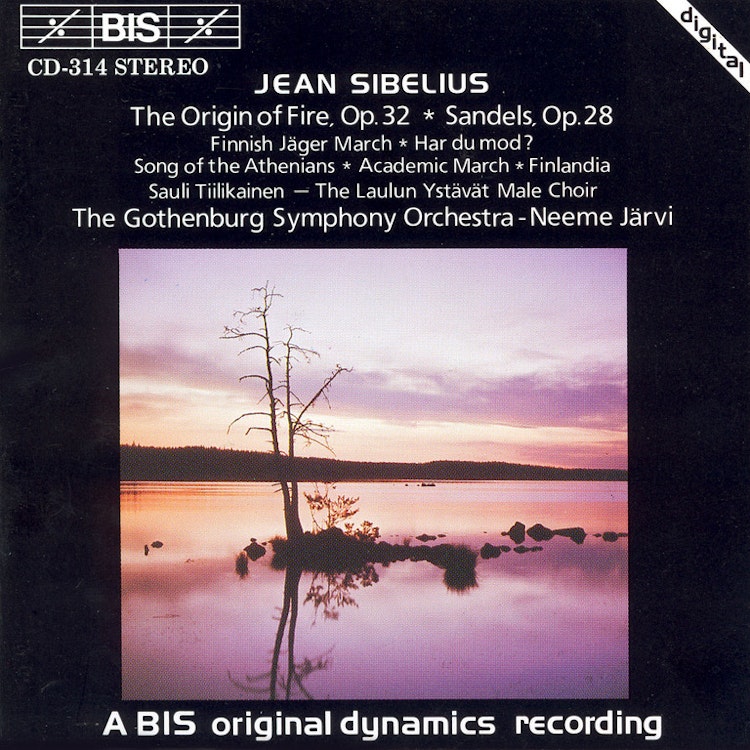
Sibelius's "March of the Finnish Jäger Battalion" became a political symbol for the 'Whites' in Finland after its performance in January 1918, following Finland's Declaration of Independence.
Composer Biography
Sibelius revised his work "Har du mod?" in 1911 and again in 1912 because he was short of money.
Historical Context
In 1902, the stealing of fire in Sibelius's cantata could have been interpreted as a Russian attack on Finnish liberty and its rekindling as the growth of Finnish patriotic sentiment.
Composition History
Sibelius's cantata, "The Origin of Fire," was first composed in 1902 for the opening of the National Theatre in Helsinki.
Cultural Impact
Finlandia, originally titled "Finland Awakes," is considered almost a second National Anthem in Finland, similar to Elgar's "Pomp and Circumstance March No.1" in England.
Compositional Technique
The descending chromatic woodwind writing in Sibelius's "Sandels" battle section offers a clear parallel to the First Symphony, which Sibelius started serious work on just after composing "Sandels."
Critical Reception
Sibelius's "Jubilee March for Small Orchestra" was ignored by the press and everyone else, except the orchestra, who applauded at rehearsal.
You might also enjoy...
Debut: Vocal Recital
Elegie, Op. 36
Mahler: Das Lied von der Erde
Arlen: Over the Rainbow
Mahler: Das Lied Von Der Erde [2011 - Remaster]
Mahler: Das Lied von der Erde (Recorded 1948)
Madsen & Egilstrøð: Beinta
Mahler: Das Lied von der Erde (Live)
Mahler: Das Lied von der Erde (Live)
Guðnadóttir: Fólk fær andlit (Arr. Jarkko Riihimäki)