The opera originally featured seventeen dances, including those in the Prologue, which would have allowed the young ladies of Priest's school to display their talents.
Critical Reception
After Purcell's death, Dido and Aeneas was not fully revived until the 1890s, when it began to be accepted as the first great operatic masterpiece by a British composer.
Compositional Technique
The opera's most famous part, Dido's final lament, is set to a chaconne-like ground bass, which concentrates the depth of her emotion with a gripping mood of restrained pathos.
Composer Biography
Purcell's father died when Henry was four, and he was placed in the care of his uncle, a noted musician, who ensured he received a thorough musical training as a Chapel Royal chorister.
Composition History
Dido and Aeneas was first produced at Mr. Josias Priest's Boarding-School at Chelsey, a school for 'young gentlewomen' founded and run by Josias Priest, a figure with high theatrical credentials.
Historical Context
Henry Purcell, the composer of Dido and Aeneas, was born two years after the monarchy was restored in England, following 12 years of Puritan rule during the Commonwealth.
Historical Context
The first chorus, 'When monarchs unite, how happy their state,' was likely a direct reference to the accession of King William III and Queen Mary as joint British monarchs in 1688.
You might also enjoy...
Dido & Aeneas
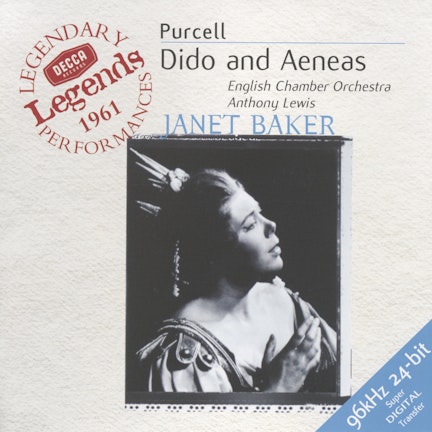
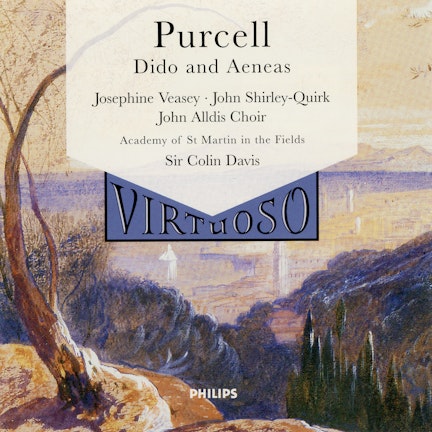
Purcell: Dido and Aeneas
Cavalli: Il Xerse
Purcell: Dido and Aeneas
Monteverdi: L'incoronazione di Poppea, SV 308
Monteverdi: Il ritorno d'Ulisse in patria
Pasquini: L'Idalma, ovvero chi la dura la vince (Live)