Rachmaninoff's First Symphony combines the classical four-movement form with a monothematic approach, deriving musical material from the Gregorian Dies irae motif.
Composition History
After the disastrous premiere, Rachmaninoff withdrew his First Symphony and forbade any further performances, believing the failure was due to his own compositional skills.
Notable Performances
Due to Rachmaninoff's self-imposed ban, his First Symphony was not heard again for 48 years after its premiere, only being performed a second time in 1945 after its score was reconstructed.
Composition History
The score of Rachmaninoff's First Symphony is dedicated to 'A. L.' with the biblical epigram 'Vengeance is mine; I will repay, saith the Lord,' referring to Anna Lodyzhenska, a woman who rejected his romantic advances.
Performer Biography
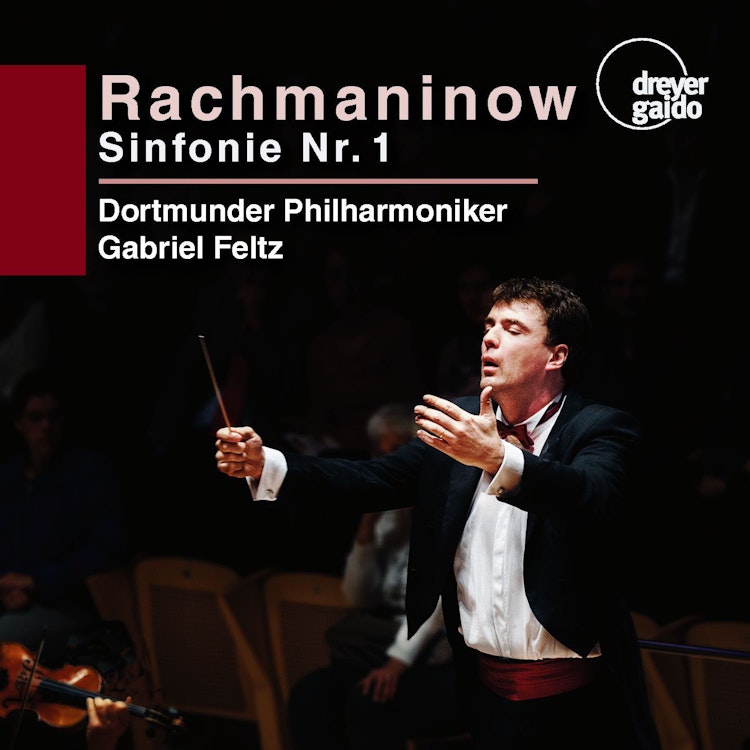
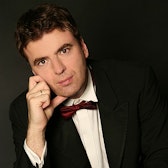
Gabriel Feltz, the conductor on this recording, has been the General Music Director of the City of Dortmund and head conductor of the Dortmund Philharmonic Orchestra since 2013/14, and will also be chief conductor of the Belgrade Philharmonic Orchestra from 2017/18.
Composer Biography
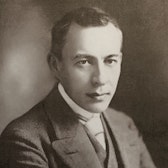
The failure of his First Symphony led Rachmaninoff into a deep depression and alcoholism, causing him to stop composing for three years until he underwent psychoanalysis under hypnosis.
Critical Reception
The premiere of Rachmaninoff's First Symphony was a disaster, with one critic famously writing that a conservatory in Hell would produce a similar work.