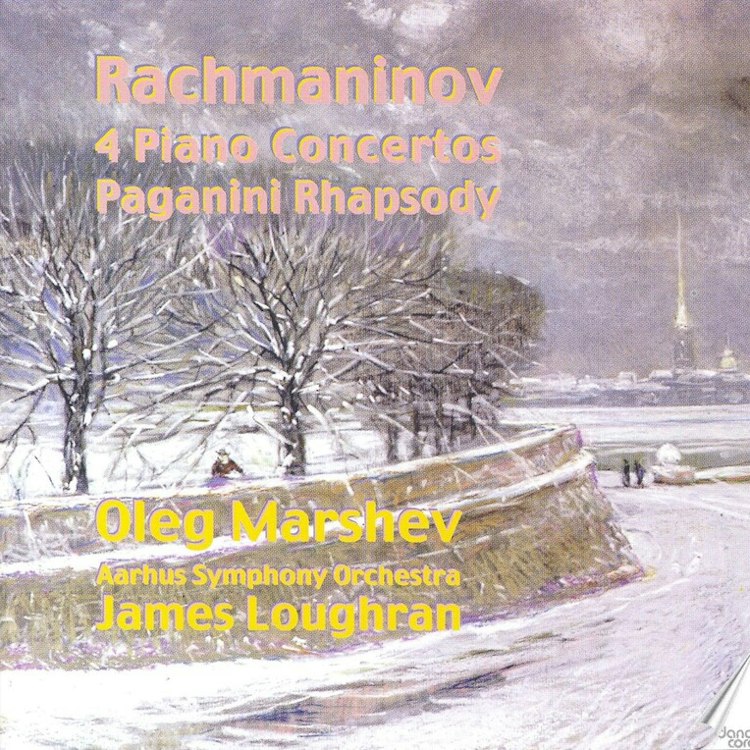
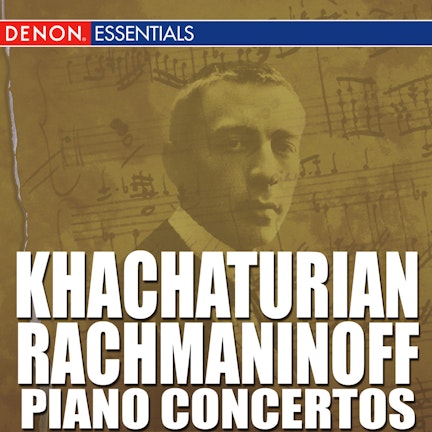
Rachmaninov: 4 Piano Concertos / Paganini Rhapsody
4/26/2007, 13 Tracks, 2:45:43
Featuring
James Loughran
Oleg Marshev
Aarhus Symfoniorkester
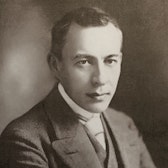
Sergei Rachmaninoff
Did you know?
1/7
Composer's Artistic Vision
Rachmaninov's works often feature a slow-moving, simple harmonic outline, possibly derived from Orthodox chants, as a backdrop for chromatic activity.
Composer Biography
As a thirteen-year-old, Rachmaninov played a piece he had written for his friend Matvej Presman, who later recalled the event.
Composition History
Rachmaninov's Piano Concerto No. 1 was completed in 1891 and underwent a wholesale revision in 1917, after his 2nd and 3rd Concertos were already written.
Compositional Technique
The Piano Concerto No. 3 features significant formal innovations, including a main theme that reappears as a motto in other movements and a restatement of the main theme at the beginning of the development section, a procedure also seen in Brahms's 4th Symphony.
Composer Biography
Rachmaninov suffered from deep insecurity, and negative criticism, such as that received by his 1st Symphony, could lead to despondency.
Composer Biography
After leaving Russia in 1917, Rachmaninov's compositional output significantly decreased, partly due to the demands of his new career as a piano recitalist in the United States.
Composition History
The Piano Concerto No. 2 was composed after Rachmaninov sought help from hypnotist Dr. Nikolaj Dahl in 1900, following harsh criticism of his 1st Symphony.