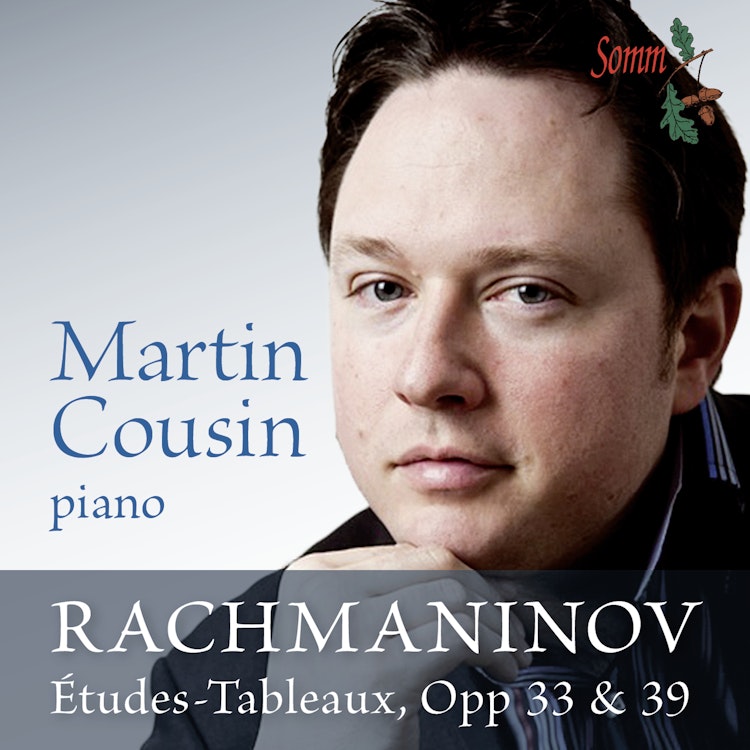
The Opus 39 set of Études-Tableaux can be seen as a hidden set of variations on the plainchant Dies Irae, with parts of the chant directly quoted in each study.
Performer Biography
Martin Cousin, the pianist on this recording, won 1st prize at the 2005 Ettore Pozzoli International Piano Competition and a Gold Medal at the 2003 Royal Over-Seas League Music Competition.
Composition History
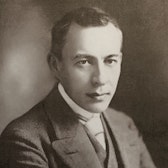
Rachmaninov found composing shorter pieces like the Études-Tableaux more difficult than symphonies or concertos, stating that brevity and lucidity are the hardest problems for a creative artist.
Composition History
The current form of Rachmaninov's Opus 33 Études-Tableaux, including two pieces originally removed by the composer, was unknown to him and countermands his wishes.
Compositional Technique
Rachmaninov's Études-Tableaux are not 'pictures' in the Mussorgskian sense, but rather allow for poetic interpretation while arising from musical and technical ideas.
Composer's Artistic Vision
Rachmaninov stated that he did not consciously try to be original, Romantic, or Nationalistic, but simply wrote the music he heard within himself.
You might also enjoy...
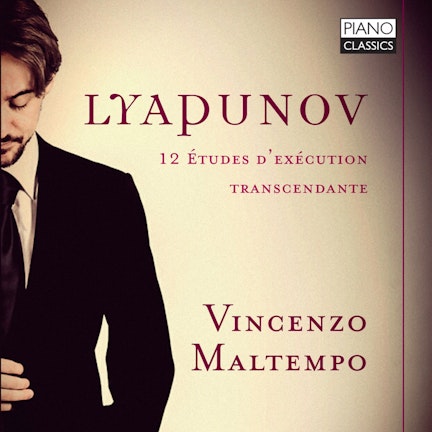
Lyapunov: 12 études d'exécution transcendante, Op. 11
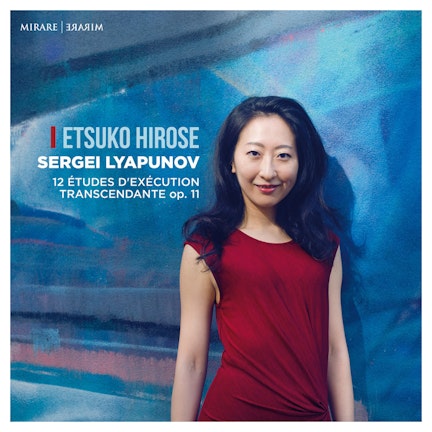
Sergei Lyapunov: 12 études d'exécution transcendante, Op. 11