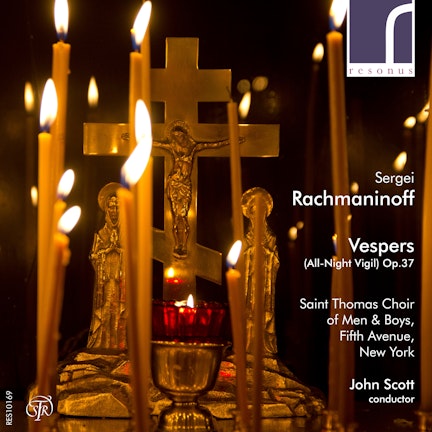
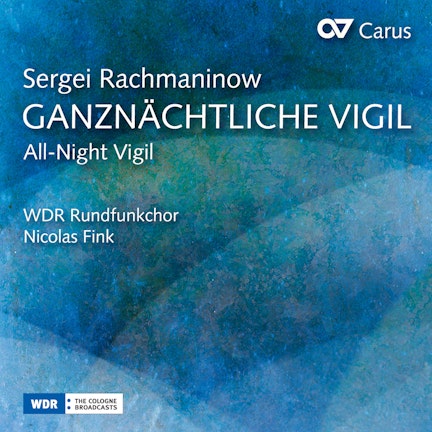
Rachmaninov based ten of the fifteen sections of the All-Night Vigil on ancient Russian Orthodox chants, and even the five original sections were so strongly influenced by chant that he called them 'conscious counterfeits.'
Composer's Artistic Vision
Despite his public image as an extroverted virtuoso, Rachmaninov's All-Night Vigil is an introspective work, deeply inspired by centuries of Russian chant rather than contemporary harmonic trends.
Composition History
Sergei Rachmaninov composed his All-Night Vigil, also known as Vespers, in less than two weeks in early 1915, during the tumultuous period of World War I and political upheaval in Russia.
Composer Biography
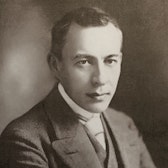
Rachmaninov considered the All-Night Vigil to be one of his two favorite works, alongside 'The Bells,' and requested that the 'Nunc dimittis' (No. 5) from the Vigil be sung at his funeral.
Recording & Production
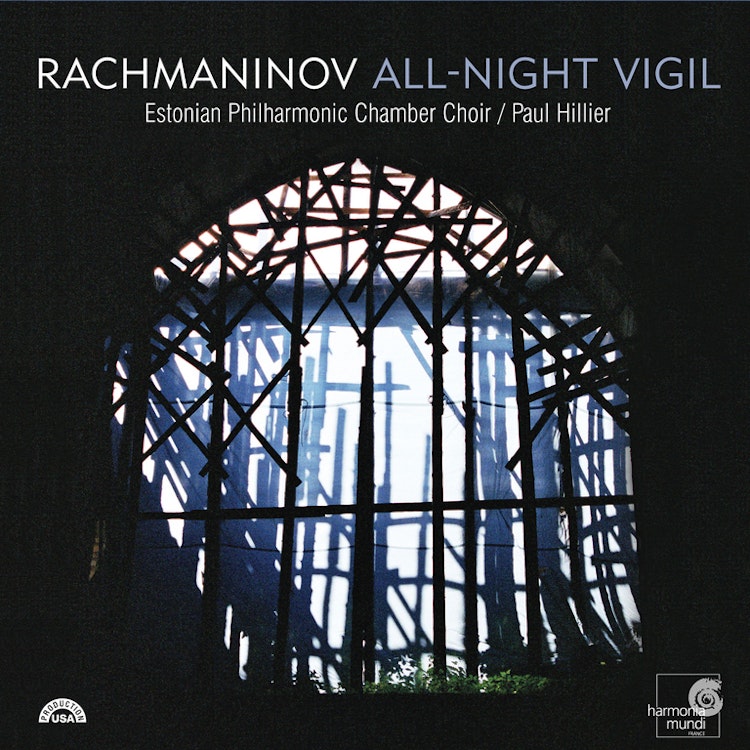
This recording of Rachmaninov's All-Night Vigil was made in May 2004 at the Dome Church in Haapsalu, Estonia, and was produced by Robina G. Young for harmonia mundi usa.
Critical Reception
The premiere of the All-Night Vigil in March 1915 was a great success, receiving enthusiastic praise from audiences, musicians, and critics, and leading to five additional performances within a month.
Performer Biography
Paul Hillier, the conductor of this recording, was awarded the Estonian Cultural Prize in 2004 and is the Artistic Director and Principal Conductor of the Estonian Philharmonic Chamber Choir.
You might also enjoy...
Rachmaninoff: All-Night Vigil, Op. 37
Rachmaninov Vespers
Nunc dimittis
Lauridsen: Lux Aeterna
Schnittke: Psalms Of Repentance
Pyotr Ilyich Tchaikovsky: Works for Choruses
Rachmaninov - Vespers
Till ängeln med de brinnande händerna (To the Angel with the fiery hands)