Rameau's musical inspiration expanded beyond classical aristocratic subjects to include daily life, with pieces depicting fair scenes, country life, and descriptive, often humorous, commentaries.
Composer's Artistic Vision
Rameau's concern for precision in musical notation led him to codify ornamentation, making agréments an integral part of the melodic design rather than leaving them to the performer's discretion.
Recording & Production
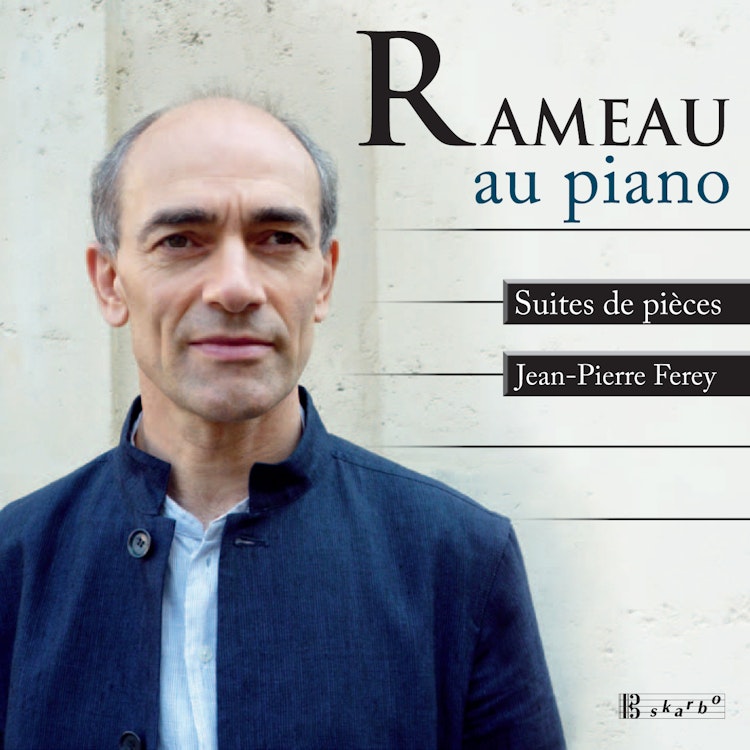
For this recording, Jean-Pierre Ferey chose a modern Fazioli piano, noting its rich timbres across all registers and long natural resonance, which he believes makes it closer to a harpsichord than other pianos.
Composition History
Jean-Philippe Rameau, a French composer, published his first collection of harpsichord pieces, Premier Livre de Pièces de Clavecin, in 1706.
Compositional Technique
Rameau experimented with unusual chromatic shifts in his piece 'L'Enharmonique', which, while familiar to modern listeners, likely caused controversy at its premiere.
Compositional Technique
In his 'Nouvelles Suites de Pièces de Clavecin' (c.1728), Rameau provided tempo indications for the first time, suggesting that it is generally better to play too slowly than too quickly.
Compositional Technique
In his Premier Livre, Rameau broke from the tradition of unmeasured writing, where performers chose the rhythm, by definitively abandoning it mid-Prelude and fixing rhythmic values for all subsequent pieces.
You might also enjoy...
Handel (Suites)
Handel: Four Keyboard Suites, HWV 429, 436, 438 & 441
Handel: Keyboard Suites, Vol. 2
Handel: Keyboard Suites Vol. II - Beethoven: Piano Sonata Op.31 No.2
Handel: Keyboard Suites Vol. II - Beethoven: Piano Sonata Op.31 No.2
Rameau: La poule, RCT 6/12
Handel: Keyboard Suites, Vol. 1
Handel: Chaconne; Harpsichord Suite; Menuett in G minor; Bach: Chromatic Fantasia & Fugue; Capriccio
Handel: 9 Suites
J.S. Bach: Partitas Nos. 1–6, BWV 825–830
Handel: Four Keyboard Suites, HWV 427, 428, 439 & 452