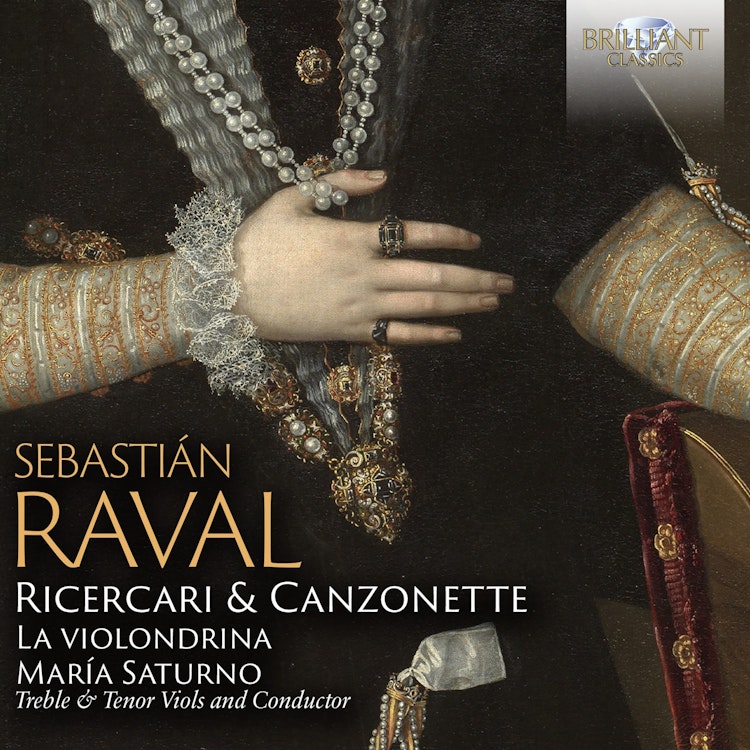
Sebastián Raval introduced rhythmic modification in his ricercari, where subjects retain their melodic profile but appear with constantly changing rhythmic patterns, a technique later adopted by Girolamo Frescobaldi.
Recording & Production
This album is the first recorded album devoted entirely to the music of Sebastián Raval, featuring works from two of his printed collections.
Compositional Technique
Raval's Ricercari in quattro fughe d'accordo feature four subjects combined, with each voice introducing a different subject and migrating between voices until all four appear superimposed at the end.
Critical Reception
Sebastián Raval's reputation was negatively impacted by a chronicle from the grieving father of Achille Falcone, with whom Raval had a 'musical duel,' and later solidified by Giuseppe Baini's influential 1828 work.
Instruments
Raval's ricercari are designated as 'a quattro voci cantabile' (for four singable voices) but are specifically intended 'per liuti, cimbali et viole d'arco' (for lutes, harpsichords, and viols), a unique and specific instrumental designation for the time.
Composition History
Sebastián Raval's Il primo libro di ricercari is considered the only book of ricercari composed by a Spanish musician and reveals an innovative spirit.
Composer Biography
Sebastián Raval, the composer, was of noble origin and fought in the Siege of Maastricht in 1579 with the Spanish Tercios before becoming a friar and musician in Italy.
You might also enjoy...
Hark! the Masked Pianoman Plays
Homegrown Melodies
Fux: Chamber Works
Mozart: Complete Sonatas for Violin and Piano, Vol. 4