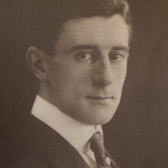
Despite collaborating, Ravel and Fokine had different artistic visions for "Daphnis et Chloé"; Ravel aimed for a 'vast musical fresco' faithful to 'the Greece of my dreams,' while Fokine sought to dynamically express ancient Greek dancing depicted on Attic vases.
Recording & Production
This recording uses a newly engraved and rigorously proof-read modern edition of Ravel's "Daphnis et Chloé," as the original 1913 published score and orchestral parts contained hundreds of errors and inconsistencies.
Critical Reception
The premiere of "Daphnis et Chloé" in 1912 received muted, if not hostile, press reaction, and Ravel was furious that it only had two performances.
Composition History
Ravel struggled with the finale of "Daphnis et Chloé" for 18 months, eventually using Rimsky-Korsakov's "Sheherazade" to overcome his creative block.
Composer Biography
Ravel saw the commission for "Daphnis et Chloé" as an opportunity to escape his reputation as a miniaturist and a 'pale imitator of Debussy,' and to find a venue for his work after his opera "L'Heure espagnole" was deemed too risqué.
Composition History
Maurice Ravel's ballet "Daphnis et Chloé" was commissioned by Serge Diaghilev, who brought Russian ballet to Paris and sought to commission French composers.
Composition History
The choreographer Michel Fokine's vision for "Daphnis et Chloé" was inspired by a Russian translation of the ancient Greek story by Longus, and he aimed for a new ballet style with integrated music, dance, and costumes.
You might also enjoy...
Ravel: Daphnis et Chloe
Ravel: Daphnis et Chloé, M. 57 & Pavane pour une infante défunte, M. 19
Ravel : Daphnis et Chloé
Maurice Ravel: Orchestral Works, Vol. 1 - Daphnis et Chloe
Ravel: Introduction et allegro pour flûte, clarinette, harpe et quatuor à cordes, M. 46
Ravel: Daphnis et Chloé
Ravel: Daphnis et Chloé
Ravel: Daphnis et Chloé
Ravel: Piano Concertos
Ravel: Daphnis et Chloé & Pavane pour une infante défunte