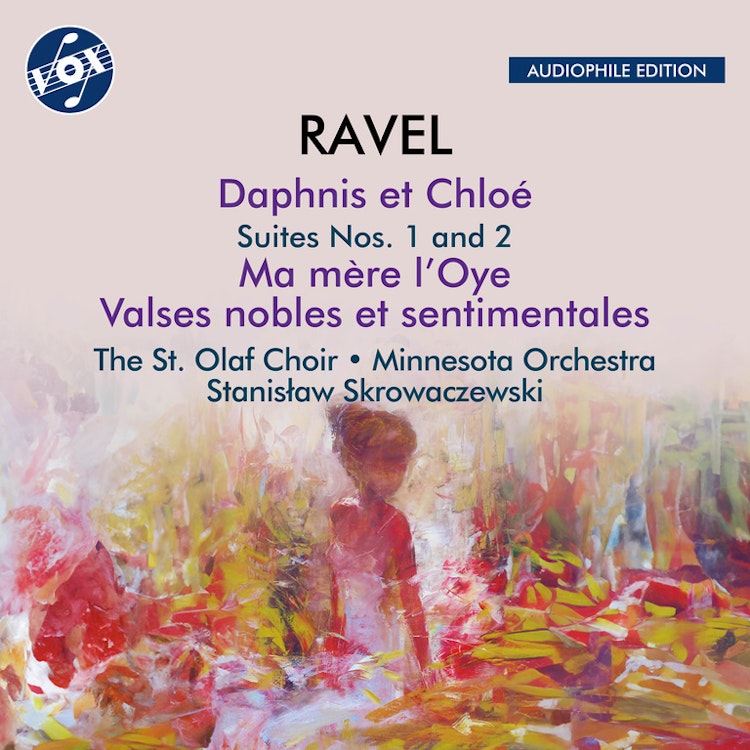
Ravel: Daphnis et Chloé Suites Nos. 1 & 2 - Ma mère l'oye - Valses nobles et sentimentales
3/22/2024, 22 Tracks, 1:21:05
Featuring
Stanisław Skrowaczewski
Minnesota Orchestra
St. Olaf Choir
Maurice Ravel
Did you know?
1/7
Composition History
Sergey Diaghilev, the enterprising director of the Ballets Russes, commissioned Daphnis et Chloé from Ravel in 1909, the same year he commissioned Igor Stravinsky's The Firebird.
Composition History
Ravel's Valses nobles et sentimentales was first performed anonymously, with the audience invited to guess the composer, leading to guesses ranging from Erik Satie to Zoltán Kodály.
Critical Reception
After hearing the anonymous premiere of Valses nobles et sentimentales, Claude Debussy, a fellow French composer, recognized Ravel's genius, stating: 'His is the finest ear ever to exist!'
Compositional Technique
When Ravel adapted his piano compositions for orchestra, he didn't merely 'transcribe' them but re-thought and recomposed the material in thoroughly orchestral terms.
Composer's Artistic Vision
Ravel described his masterpiece Daphnis et Chloé as a 'choreographic symphony' intended to be a 'vast musical fresco' faithful to 'the Greece of my dreams'.
Composer's Artistic Vision
Ravel's fastidious craftsmanship is attributed to his Swiss engineer father, while his lifelong fascination with Spain is linked to his Basque mother.
Composer Biography
Maurice Ravel, though considered a thoroughly French composer, was not French by lineage; his father was Swiss and his mother was Basque, from where Ravel was born.
You might also enjoy...
Ravel - Orchestral Works
Ravel: Boléro, Ma Mere L'Oye, Rhapsodie Espagnole, Fanfare, Piece En Forme De Habanera