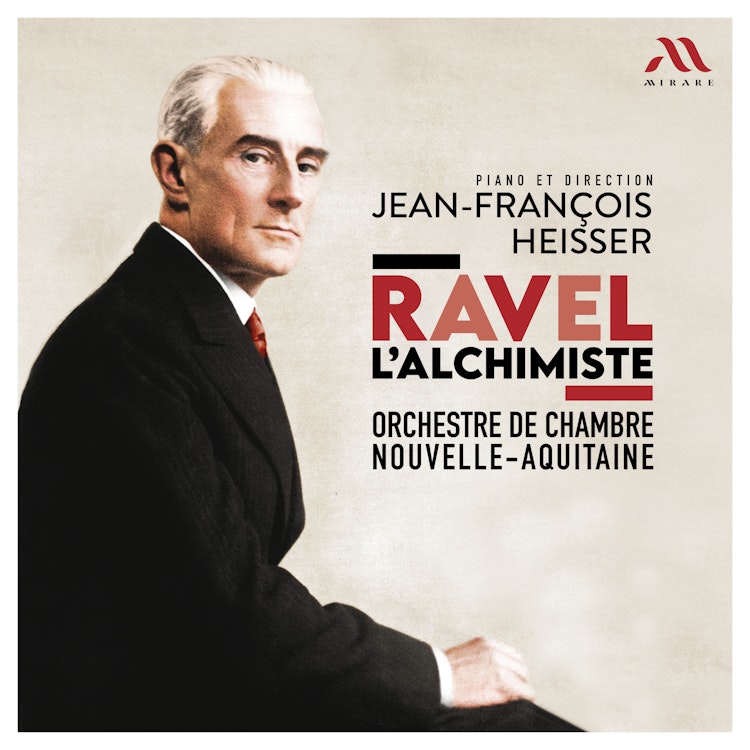
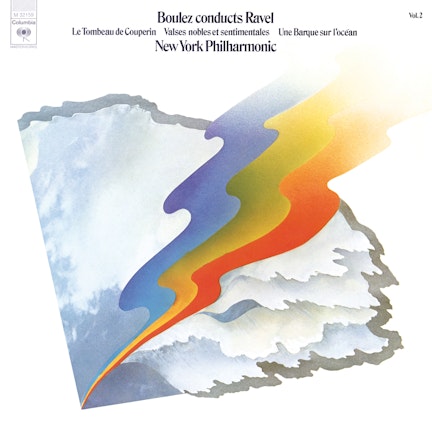
Maurice Ravel was highly demanding regarding the interpretation of his works, particularly concerning tempo, the balance between freedom and rigor, and the unique character of each composition.
Recording & Production
This album was recorded at the Théâtre Auditorium de Poitiers (TAP), whose auditorium is known for having one of the best acoustics in Europe.
Performer Biography
Jean-François Heisser, the pianist and conductor on this album, was a student of Vlado Perlemuter, who himself received interpretative advice directly from Maurice Ravel.
Compositional Technique
Many of Maurice Ravel's orchestral works, including the Pavane, Ma mère l'Oye, and Le Tombeau de Couperin, were originally composed for piano and later orchestrated by him.
Composition History
Maurice Ravel intended to premiere his Piano Concerto in G major himself in 1931, but due to health issues, he had to abandon the idea and Marguerite Long learned it "with maximum celerity."
Compositional Technique
Maurice Ravel always composed at the piano, using it to define the harmonic atmosphere of a piece while simultaneously imagining the orchestral colors.
Composition History
Maurice Ravel's suite Ma mère l'Oye was dedicated to Jean and Mimie Godebski, children with whom Ravel loved to play, and without whom this masterpiece might not have been created.
You might also enjoy...
Debussy: Orchestral Works, Vol. 6
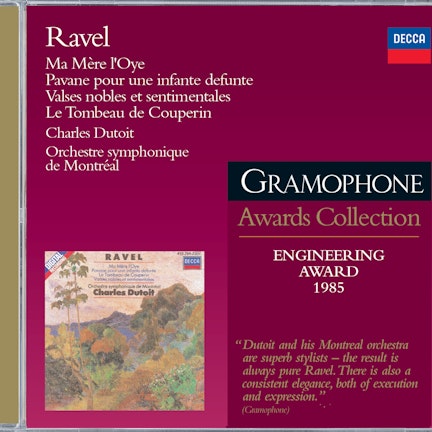
Ravel: Ma Mère L'Oye/Pavane pour une Infante Défunte etc.
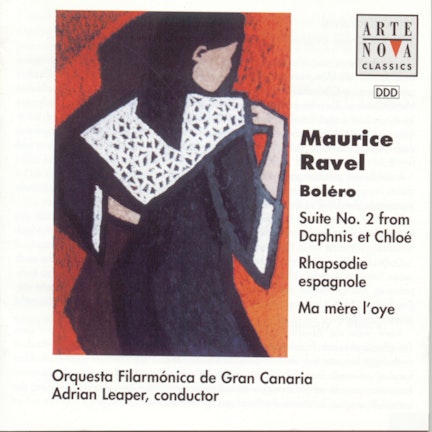
Ravel: Bolero/Daphnis Et Chloé/Rhapsodie Espagnole
Ravel: Bolero - Mother Goose Suite
Ravel: Bolero - Mother Goose Suite
Debussy: Prélude à l'après-midi d'un faune; Ravel: Valses nobles et sentimentales; Le Tombeau de Couperin; Petite Suite
Ravel: Orchestral Works
Ultimate Classics - Ravel: Bolero
Ravel Bolero
Orchestre de Paris - Ravel
Greatest Hits Of Ravel
Ravel: Ma Mère l'Oye, Le tombeau de Couperin & Shéhérazade, ouverture de féerie
Ravel: Une barque sul l'océan, Valses nobles et sentimentales & Le Tombeau de Couperin