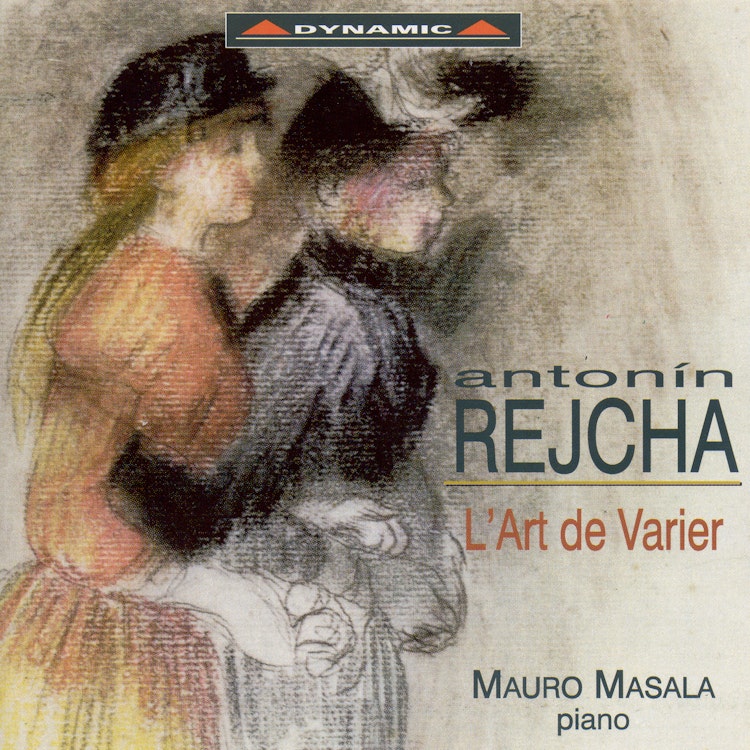
In L'Art de varier, Rejcha, the composer, anticipates a 'modern' treatment of variation form, similar to the 'transformation' later adopted by Beethoven.
Compositional Technique
The rhythms in L'Art de varier are quite free; for example, in Variation No. 4, the first measure is in 4/4, the second in 3/4, and the third in 2/4.
Compositional Technique
Rejcha's L'Art de varier, Op. 57, consists of 57 variations for piano, a numerical record later surpassed only by Paganini's 60 Variations on Barucabà for another instrument.
Composer's Artistic Vision
Antonin Rejcha, the composer, believed that major and minor modes, as well as binary and ternary rhythms, were old-fashioned.
Composer Biography
While in Bonn, Antonin Rejcha played the flute in the Elector's orchestra alongside Beethoven, who played the viola and harpsichord.
Composer Biography
Antonin Rejcha, the composer, was introduced to music by his uncle, Joseph Rejcha, a renowned cellist.
Composer's Artistic Vision
Antonin Rejcha, the composer, proposed that a modern orchestra should be significantly larger, suggesting an average of 198 elements, including 60 violins and 12 kettledrums.
You might also enjoy...
Bach: Goldberg Variations, BWV 988
50 Variations on a Waltz by Diabelli
Bach: Goldberg Variations
Bach: Goldberg Variations
Bach: Goldberg Variations, BWV 988
Bach: Variations Goldberg
Beethoven: 9 Variations on Paisiello's "Quant'è più bello", WoO 69