Reicha published several sets of piano variations, like the Variations on a Theme of Gluck, Op. 87, to gain recognition and improve his financial situation during a period of professional difficulties in Paris.
Recording & Production
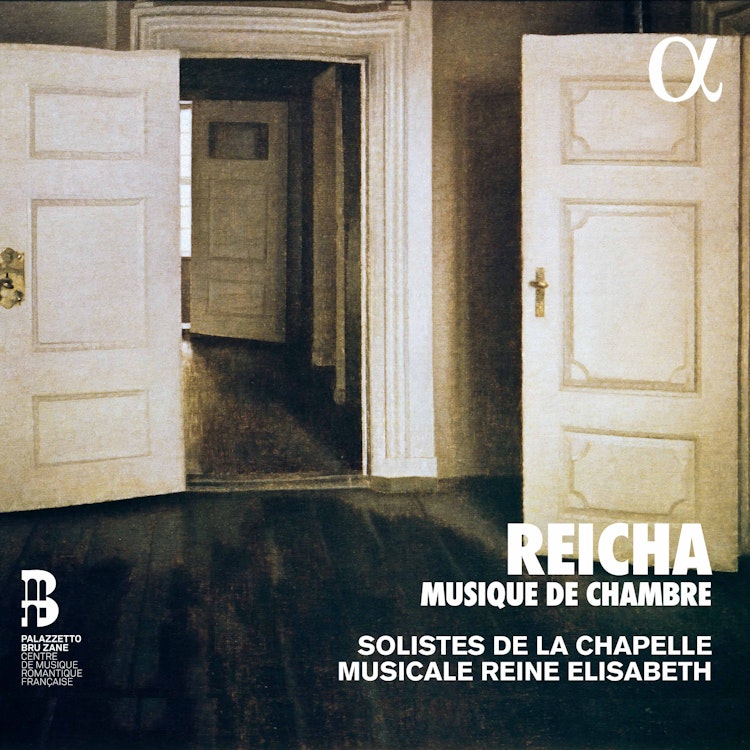
This album was recorded at the Queen Elisabeth Music Chapel's own Studio Haas Teichen, which serves as a rehearsal, recording, and concert center.
Compositional Technique
The Quartet Op. 95 No. 1, dedicated to violinist Pierre Rode, shows traces of a symphonic style and was intended for professional musicians, marking a shift from salon music to public concert.
Compositional Technique
Reicha's Prelude No. 29, 'Enharmonique', uses numerous chromaticisms and enharmonic properties of the keyboard to create a surprising series of modulations.
Composer Biography
Antoine Reicha, a significant composer and musical personality in early 19th-century France, was notably the teacher of Hector Berlioz.
Composer's Artistic Vision
Hector Berlioz considered Antoine Reicha a "genuine revolutionary" who, despite his academic recognition, was open to experiments and innovations in his teaching and writings.
Compositional Technique
Reicha's Fugue No. 9, subtitled 'cercle harmonique', unusually presents its subject in all twelve major keys of the tonal system before returning to the initial D major.
You might also enjoy...
Eduardo del Pueyo - The Complete Philips Recordings
C.P.E. Bach: The Complete Works for Piano Solo, Vol. 1
C.P.E. Bach Edition, Vol. 1
Carnegie Hall Recital 1954
Icon: Artur Schnabel
Beethoven: Piano Music, Vol. 5
Dino Ciani - A Tribute
Hummel: Piano Music / Chamber Music (6 Cd Box Set)
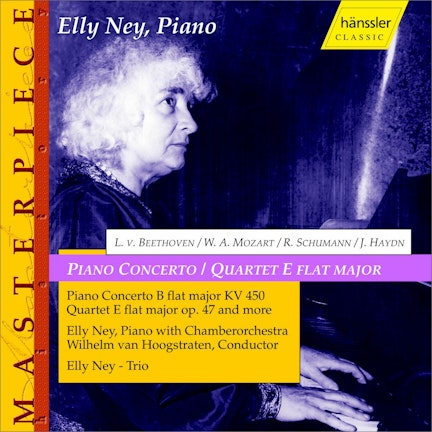
Mozart: Piano Concerto No. 15 / Schumann: Piano Quartet in E-Flat Major
Beethoven Edition, Vol. 6
Beethoven, Mozart & Others: Piano Works
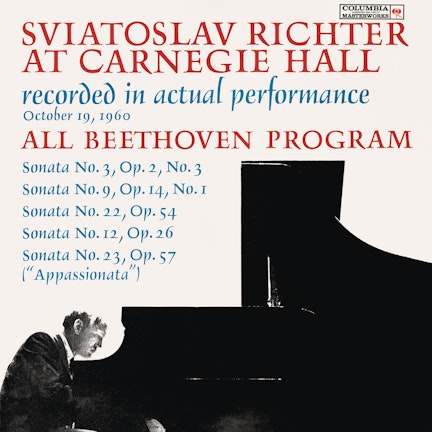
Sviatoslav Richter Live at Carnegie Hall: All Beethoven Program (October 19, 1960)
Sviatoslav Richter Plays Beethoven
Pratsch: Piano Sonata in C Major / Cello Sonata in A Minor / Quartet / Rondo / Fandango