Reina's compositions often require almost virtuoso mastery, not only in pieces for a few solo voices but also in those for four, five, six, or more parts.
Composition History
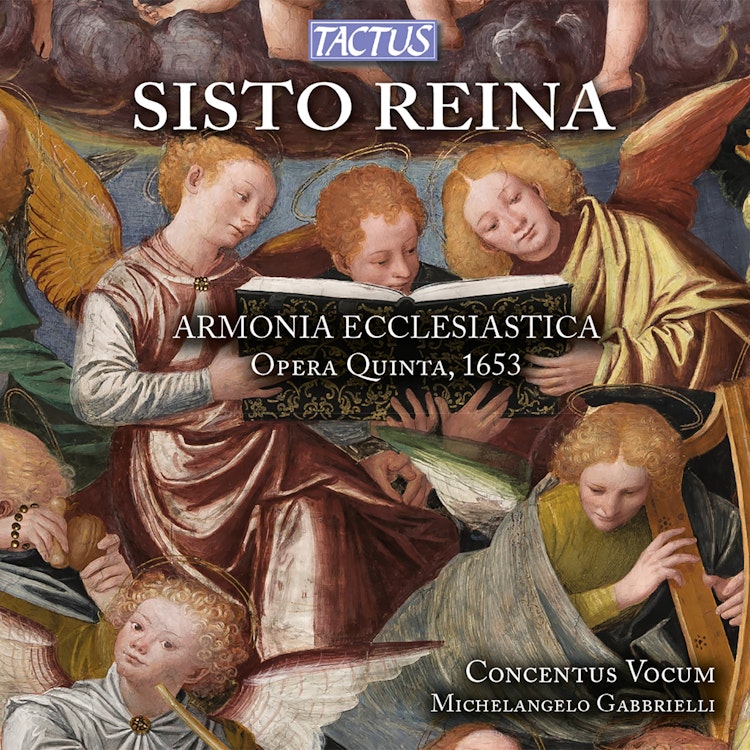
Sisto Reina's Armonia ecclesiastica, published in 1653, was dedicated to Princess Angelica Luigia Mariana Gonzaga, a nun in a Milanese convent.
Composer Biography
Sisto Reina's uncle, Sisto Campo, was an organist at the Santuario di Saronno for 56 years and suggested his nephew as his replacement due to his musical talent.
Historical Context
In 17th-century Lombardy, unlike other parts of Italy, many nunneries fostered excellent musical performance, including instrumental practice on organ, trombone, bassoon, and viols.
Composer Biography
Sisto Reina, born Gioseffo, was the third son of a Milanese nobleman and a woman from Como; he began his religious and artistic journey in 1641.
Composer's Artistic Vision
Sisto Reina was very attentive to the 'affective' impact of the sung text, ensuring his music conveyed the vivid images of the sacred text as effectively as possible.
Recording & Production
The recording uses a positive organ and a harpsichord for the basso continuo, alternating them to highlight the different character and expressive qualities of each piece.
You might also enjoy...
Die liebe Maienzeit
Chorbuch European Folksongs
European Folk Songs for Equal Voices
Philips: Cantiones Sacrae / Quinis Vocibus
Orff: Carmina Burana
The Sun Most Radiant: Music from the Eton Choirbook, Vol. 4
Vir Dei Benedictus
Lasso: Lagrime di San Petro
Music from the Peterhouse Partbooks, Vol. 4
Pepping, E.: Missa Dona Nobis Pacem / Jesus Und Nikodemus / Ein Jegliches Hat Seine Zeit / Uns Ist Ein Kind Geboren