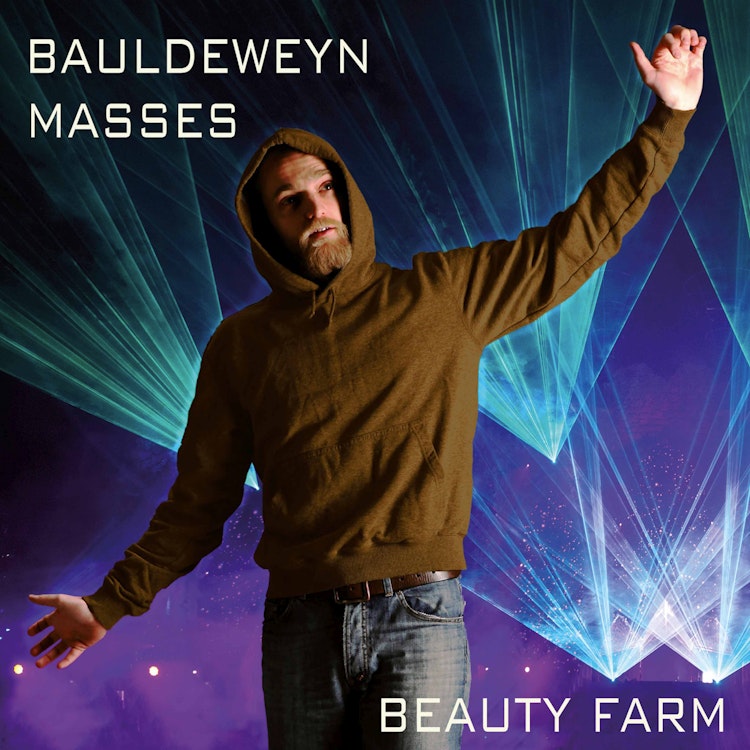
The Missa sine nomine is one of the earliest six-part masses and is unique among Bauldeweyn's works on this album for not being based on a pre-existing model.
Compositional Technique
Bauldeweyn's Missa En douleur en tristesse uses a five-part version of the chanson "En douleur en tristesse" as a model, resembling a parody or imitation mass.
Compositional Technique
A procedure typical of Bauldeweyn's music is the use of clear, self-contained, and repeated phrases that emerge from dense part-writing, often with entire voice groups repeated in various registers.
Compositional Technique
The Missa Inviolata is Bauldeweyn's only mass entirely based on a traditional cantus firmus, the "Inviolata, integra et casta es, Maria" sequence, which he uses in its unusual full twelve-verse form.
Historical Context
Unlike most of his contemporaries, Bauldeweyn was active only north of the Alps, which meant he remained outside the catchment area of music publishers, as music printing was primarily in Italian hands during his lifetime.
Composer's Artistic Vision
The Missa sine nomine is guided by a mysterious symbolism, with the six voices in its earliest source labeled as stages of human life: PUERICIA, INFANCIA, ADOLESCENCIA, VIRILIS ÆTAS, SENECTUS, and DECREPITUS.
Composer Biography
Noel Bauldeweyn, the composer, was active in The Netherlands and served as magister cantorum at St. Rombouts church in Mechelen from 1509 to 1513.
You might also enjoy...
Compère: Missa Galeazescha, Music for the Duke of Milan
Schola Aeterna - Chants à la vierge
Lechner: Geistliche Festmusik
Leonetti: Il primo libro de madrigali a 5 - Missarum octonis vocibus
Cantus coagulatus
Philips, P.: Vocal Ensemble Music (Paradisus Sacris Cantionibus)
Madrid Atrium Musicae: Three Centuries of La Spagna
Medieval Christmas
Carlos V: Mille Regretz - La Canción Del Emperador
Ein musikalisches Gipfeltreffen
Ludovico Einaudi: Portrait (Deluxe Edition)
Theodorakis, M.: Raven / Adagio / Genzmer, H.: Harp Concerto / Fantasia for Harp