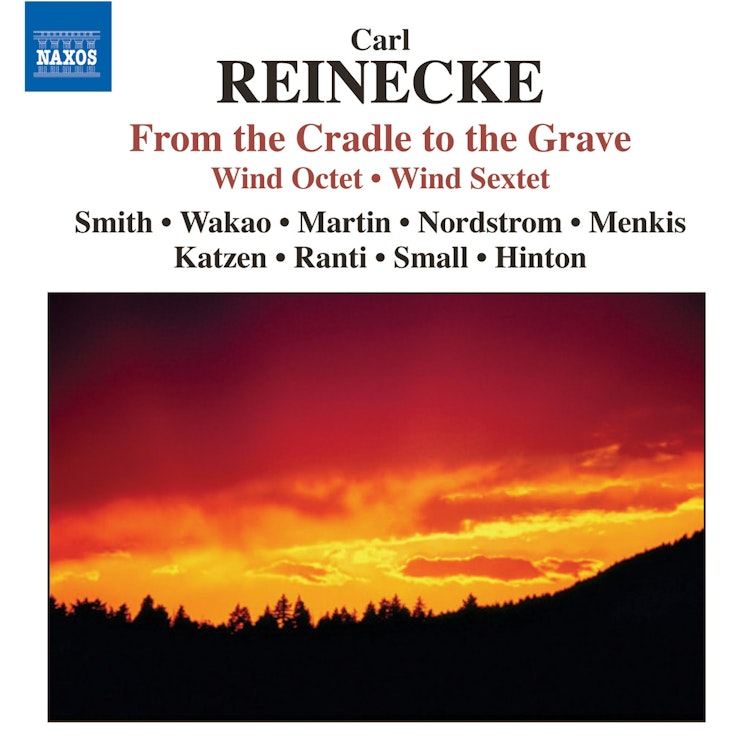
Reinecke: Octet / Von Der Wiege Bis Zum Grabe (From the Cradle To the Grave) / Sextet
12/24/2008, 15 Tracks, 1:07:34
Featuring
Fenwick Smith
Hugh Hinton
Boston Symphony Orchestra
Carl Reinecke
Did you know?
1/7
Composer Biography
Reinecke served as music director of the Gewandhaus Orchestra of Leipzig and taught piano and composition at the Conservatory, where his students included Bruch, Albéniz, and Janáček.
Compositional Technique
Reinecke's extensive experience as an orchestral conductor gave him a deep understanding of wind instruments, ensuring his music for them always sounds well.
Composition History
Reinecke began featuring wind instruments more prominently in his music around 1890, possibly to avoid competing with Brahms, whose popularity was rising.
Critical Reception
Despite their quality, Reinecke's wind pieces were overlooked for nearly a century, with this recording being their first.
Composer's Artistic Vision
Reinecke's compositional style was heavily influenced by Mendelssohn and Schumann, whom he admired and considered his disciples.
Composer Biography
Carl Reinecke, a child prodigy, was an accomplished violinist, violist, prominent concert pianist, and conductor, composing 288 works across all genres.
Historical Context
In the Romantic era, stringed instruments were considered the ideal for chamber music, making pure wind ensembles like Reinecke's rare.
You might also enjoy...
Changing Colors
Beethoven, Ysaÿe, Schumann & Britten: Cello Works
Cello Recital: Hornung, Maximilian - Saint-Saens, C. / Beethoven, L. Van / Ginastera, A. / Janacek, L. / Brahms, J.
Moments of Youth
Con moto
Horn and Piano: A Cor Basse Recital
Julie Albers
Martha Argerich and Friends Live from the Lugano Festival 2009
Lentini: Chamber Music
217 - Werke für Violoncello und Klavier
Hedra (works for cello and piano)
Cello Recital: Hai-Ye Ni
Marin Marais: Folies d'Espagne, La Rêveuse & Other Works