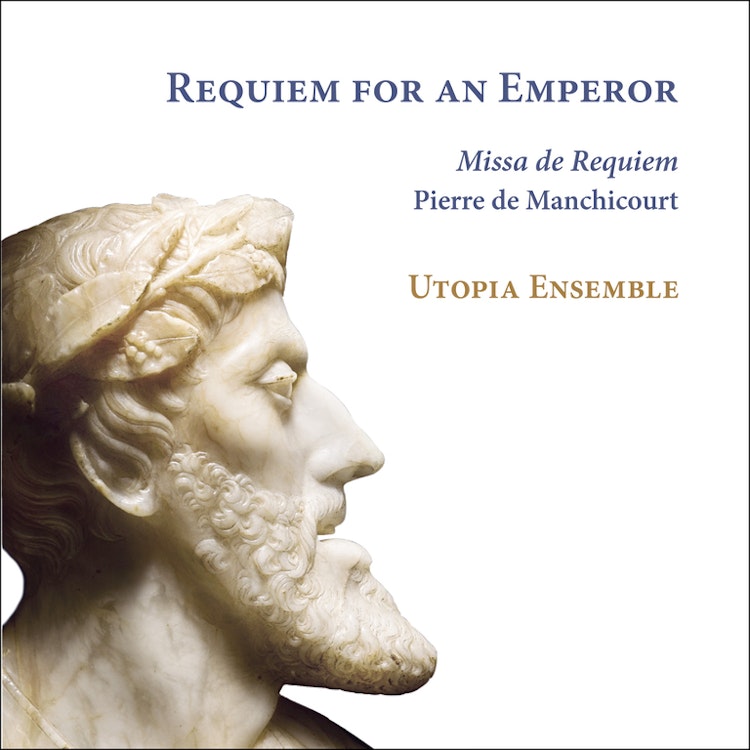
Music played a fundamental role in expressing imperial power for Charles V, with polyphonic masses and motets accompanying major life events like his baptism, knighting, and coronations.
Compositional Technique
Pierre de Manchicourt's Requiem, a five-voice work, incorporates the entire plainchant of the Office of the Dead in the soprano line, with other voices paraphrasing Gregorian chant in counterpoint.
Composer's Artistic Vision
Charles V actively participated in vocal music, beating time and calling out singers who lost their way during performances.
Composer Biography
As a child, Charles V was educated in the liberal arts, including music, and was reportedly skilled enough to play in polyphonic works.
Recording & Production
This album was recorded in February 2024 at the Augustinus Muziekcentrum in Antwerp, Belgium.
Composition History
Charles V founded his own musical establishment, the Capilla Flamenca, modeled on his parents' Capilla Real, which was made up entirely of Franco-Flemish musicians.
Historical Context
Charles V, the Holy Roman Emperor, died in 1558, having ruled an empire 'over which the sun never sets' that stretched from the North Sea to the New World.
You might also enjoy...
To All Things a Season: Chansons, Madrigals and Lieder by Lassus
Giaches de Wert: Versi d'Amore
Dufay: Messe "Se la face ay pale"
Josquin Desprez - Motets and Chansons
Triompho de le done
Josquin Desprez: Baisiez moy
Desprez: Tant vous aime
Music from the Renaissance
Orlando di Lasso: Chansons, Madrigale, Lieder
Tomkins: Songs of 4, 5, and 6 Parts
Flora Gave Me Fairest Flowers - Elizabethan Madrigals
Baston: Flemish and French Chansons
Salve Susato
Josquin Desprez: Motets and Chansons/Hilliard Ensemble