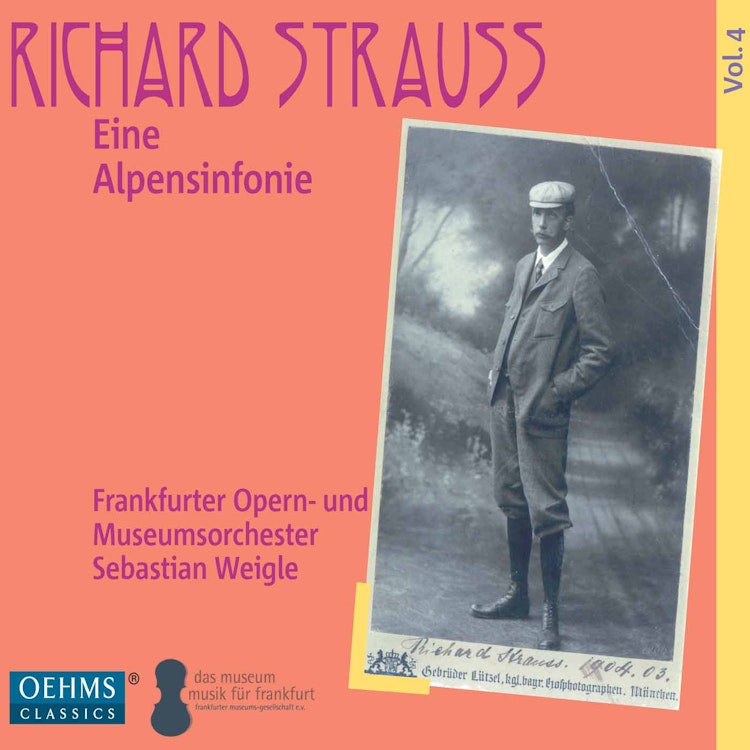
Richard Strauss: Eine Alpensinfonie, Op. 64, TrV 233 (Live)
9/2/2016, 1 Track, 50:31
Featuring
Sebastian Weigle
Frankfurter Opern- und Museumsorchester
Richard Strauss
Did you know?
1/7
Composer's Artistic Vision
Strauss considered calling his Alpine Symphony 'The Antichrist,' viewing it as representing 'moral liberation through work with reverence shown towards eternally magnificent Nature,' referencing Friedrich Nietzsche's work.
Critical Reception
At its 1915 premiere, the Alpine Symphony was described by critic Paul Bekker as a 'sonic orgy' and a 'nakedly realistic Alpine poem,' yet he also called it 'unmistakeably sinking and wilting in its essence.'
Performer Biography
Sebastian Weigle, the conductor on this recording, was named 'Conductor of the Year' by 'Opernwelt' critics in 2003 for his premiere of Strauss's The Woman without a Shadow at the Frankfurt Opera.
Compositional Technique
The Alpine Symphony uses a large orchestra, including twelve horns, two trumpets, two trombones behind the stage, and wind and thunder machines to create realistic soundscapes.
Composition History
The Alpine Symphony was originally conceived as a symphonic poem dedicated to the memory of Karl Stauffer, a forgotten painter and sculptor who committed suicide.
Performer Biography
The Frankfurt Opera and Museum Orchestra, which performs on this album, was named 'Orchestra of the Year' by the journal 'Opernwelt' for three consecutive years (2009, 2010, and 2011).
Composition History
Richard Strauss's Alpine Symphony was inspired by a mountain hike he took as a youth in 1879, during which he was caught in a thunderstorm.
You might also enjoy...
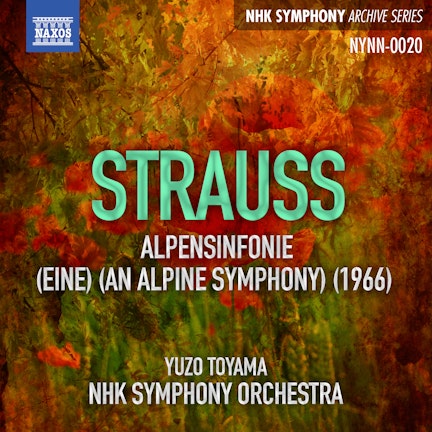
Strauss: Eine Alpensinfonie (An Alpine Symphony) [Live]
Strauss: Don Quixote, Op. 35
Smetana: Má vlast
Franz Konwitschny conducts Sinfonia domestica
Smetana: Ma Vlast
Lovro von Matacic
Smetana: Ma Vlast
Strauss: Alpine Symphony
Smetana: Ma Vlast (My Fatherland)
R. Strauss: Eine Alpensinfonie op.64
R. Strauss: Ein Heldenleben - Tod und Verklärung
Smetana - Má Vlast
Richard Strauss: Also sprach Zarathustra; Tod und Verklärung