Michele Boegner won the Grand Prix at the second Enesco Competition at the age of seventeen and was mentored by musicians like Wilhelm Kempf and Geza Anda.
Composition History
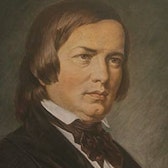
Schumann dedicated his Kreisleriana to Clara Schumann, stating in a letter that the pieces were "completely dominated by you and by the thought of you."
Performer Biography
Michele Boegner has performed extensively in major cities across France, Europe, the United States, South America, and Asia, working with many renowned conductors.
Performer Biography
Michele Boegner studied piano with Vlado Perlemuter and chamber music with Jacques Fevrier in Paris, earning First Prizes in both.
Historical Context
In 1838, the year some of these Schumann works were composed, Daguerre's invention forced a rethinking of pictorial representation, while musicians still had decades before the phonograph's similar impact.
Recording & Production
Michele Boegner chose to record this album on a Fazioli grand piano, seeking a balance between the power of a modern piano and the clarity of early 19th-century keyboards.
Composer's Artistic Vision
Schumann described his Kinderszenen (Scenes from childhood) as 'memories for people who have grown up,' composed by 'a grown-up child,' with titles added after the music was written.