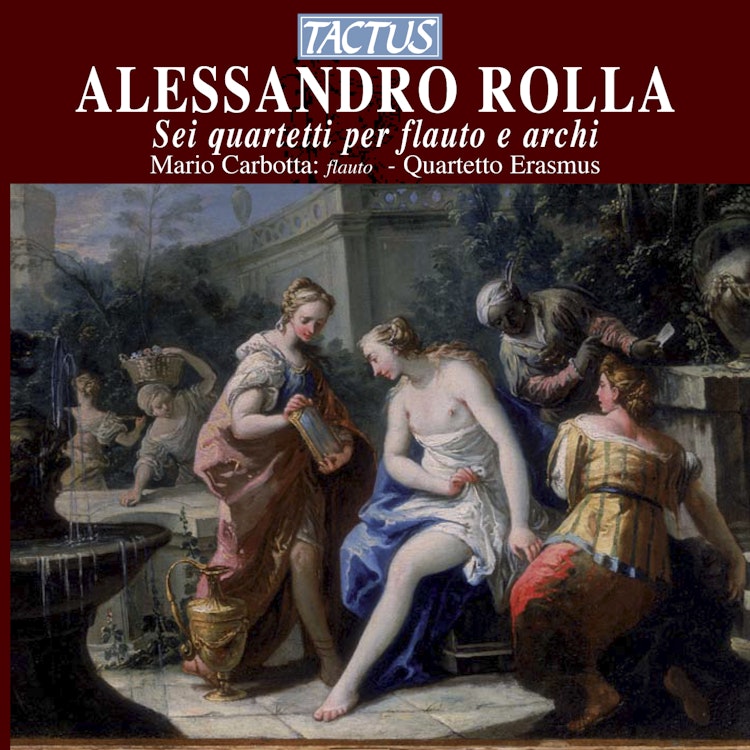
Alessandro Rolla is considered a crucial link between the declining Italian musical tradition and the flourishing Austro-German repertoire, as noted by an 1812 critic.
Historical Context
During the late 18th and early 19th centuries, there was significant interest in Italy in the flute quartet, cultivated by both opera composers and instrumental music writers.
Compositional Technique
Alessandro Rolla's quartets demonstrate extreme care in treating individual instrumental timbres and feature well-articulated formal structures.
Composer Biography
Alessandro Rolla (1757-1841) was a highly esteemed musician in Milan, serving as orchestral conductor at the Teatro alla Scala and as a viola professor at the Milan Conservatory.
Composition History
Alessandro Rolla's six quartets for flute and strings, presented here, form a unified body of work, though their exact composition date is unknown.
Compositional Technique
Rolla's quartets showcase an equitable distribution of solo parts, virtuosic passages, and complex rhythmic patterns, suggesting they were intended for professional musicians.
Composition History
These quartets by Alessandro Rolla exist in two complete manuscript collections, one in Ostiglia and another in Bologna, confirming their intended unity.
You might also enjoy...
Paisiello: 6 Flute Quartets, Op. 23
Mozart: Flute Quartets
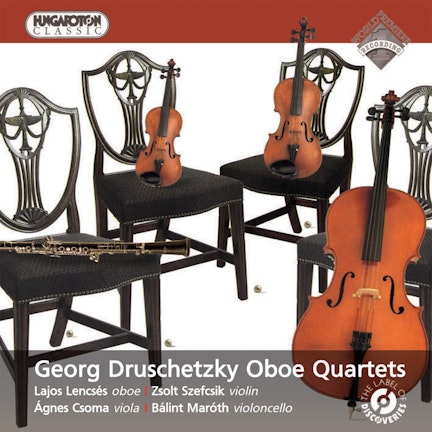
Druschetzky: Oboe Quartets in F Major / G Minor / E-Flat Major / C Major
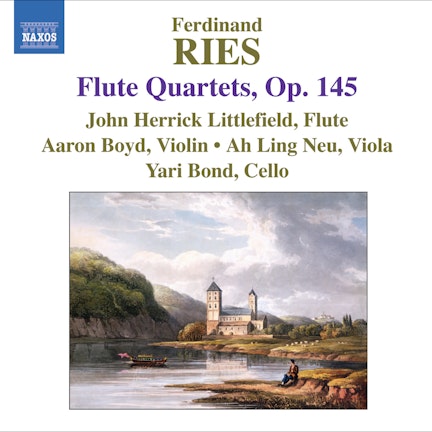
Ries: 3 Flute Quartets, Op. 145
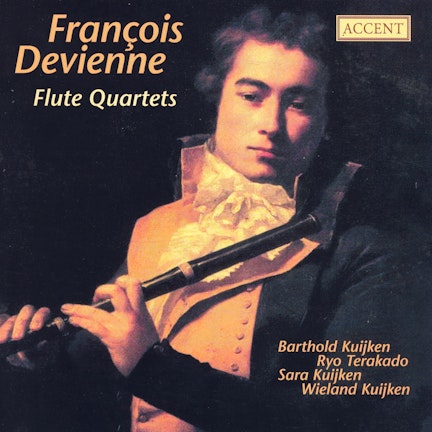
Devienne, F.: Flute Quartets, Opp. 16, 66
Wolfgang Amadeus Mozart: Flute Quartets & Flute Concerto
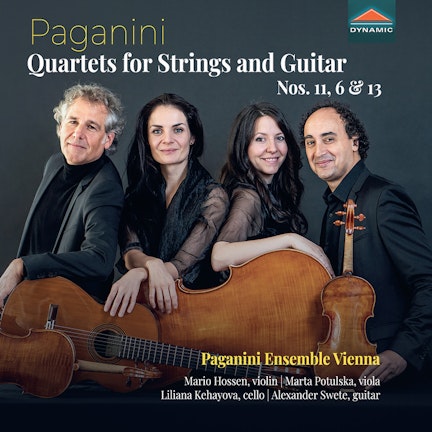
Paganini Quartets for Strings and Guitar Nos. 11, 6 & 13
Guitar Collection, Vol. 8
Stamitz, C.: Oboe Quartets, Op. 8, Nos. 1, 3, 4 / Haydn, M.: Divertimento in C Major
Viotti: 3 Flute Quartets, Op. 22
Edelmann: 4 Piano Quartets
Krommer, F.: Oboe Quartets Nos. 1 and 2 / Fiala, J.: Oboe Quartets in E-Flat Major / F Major