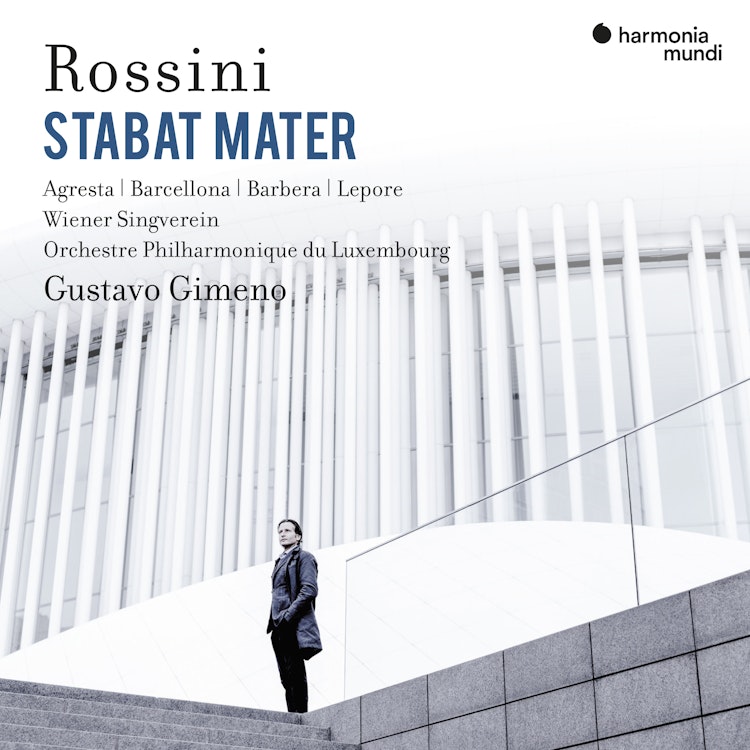
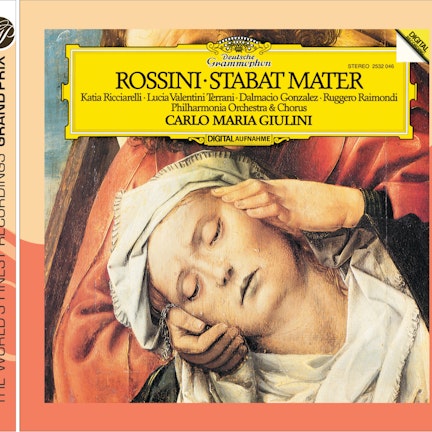
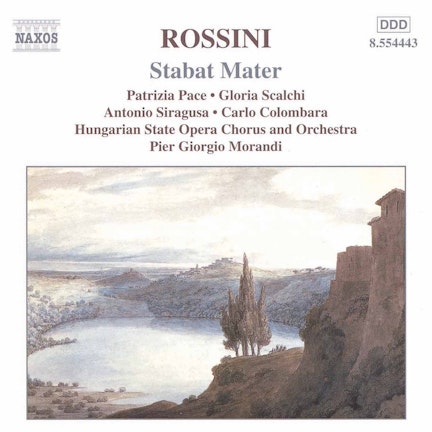
The premiere of the all-Rossini Stabat Mater in Paris in 1842 was rapturously received, with poet Heinrich Heine describing the sounds as a 'vestibule of Heaven'.
Performer Biography
The Wiener Singverein, the choir on this recording, was founded in 1858 and has premiered major works like Brahms' Deutsches Requiem and Mahler's Symphony No. 8.
Composition History
Rossini's Stabat Mater was commissioned by Manuel Fernández Varela, Archdeacon of Madrid, during Rossini's 1831 trip to Spain.
Composition History
Rossini initially only composed half of the Stabat Mater and had his friend Giovanni Tadolini, a gifted composer of vocal music, complete the rest due to illness.
Composition History
The full, all-Rossini version of the Stabat Mater was completed after the original manuscript was sold and published without his authorization, leading him to replace Tadolini's sections.
Compositional Technique
Rossini's Stabat Mater includes two a cappella movements, 'Eja, mater' and 'Quando corpus morietur', which show his interest in pre-classical choral styles.
Critical Reception
Richard Wagner, under the pseudonym 'Valentino', criticized Rossini's Stabat Mater as not being true religious music, but rather 'beautiful opera music covered with Latin words'.
You might also enjoy...
Liszt: Psalm 13
Rossini: Stabat Mater
Rossini: Stabat Mater
Rossini, G.: Messa Di Gloria
Messa Solenne for Soloists, Male chorus, and Orchestra