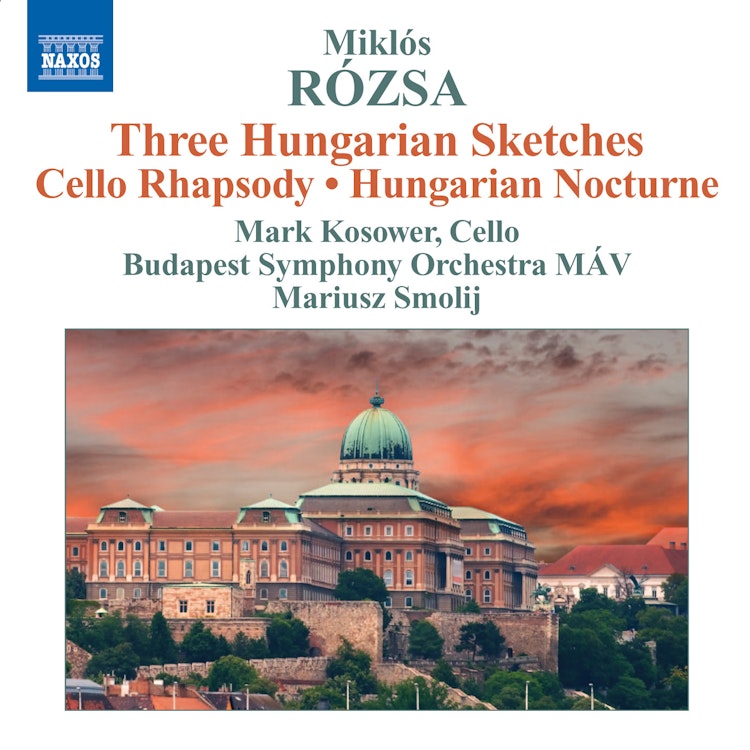
Rozsa: Three Hungarian Sketches - Hungarian Nocturne
7/4/2011, 6 Tracks, 56:39
Featuring
Mariusz Smolij
Mark Kosower
MÁV Szimfonikus Zenekar
Miklós Rózsa
Did you know?
1/7
Performer Biography
Mark Kosower, the cellist on this recording, was appointed Principal Cello of the Cleveland Orchestra by Music Director Franz Welser-Möst in 2010.
Composition History
Miklós Rózsa composed Notturno ungherese, Op. 28, as a commission from the Edward B. Benjamin Tranquil Music Project, which encouraged composers to create music that 'charms and soothes'.
Composer Biography
Miklós Rózsa, the composer, had a journey from Budapest to Hollywood, via Leipzig, Paris, and London, which he chronicled in his autobiography, Double Life.
Composition History
The Rhapsody for Cello and Orchestra, Op. 3, was Miklós Rózsa's first published orchestral work, written at the end of his studies at the Leipzig Conservatory in 1929.
Recording & Production
The Rhapsody for Cello and Orchestra, Op. 3, is a world première recording on this album.
Compositional Technique
The Rhapsody for Cello and Orchestra is tightly structured in an arch form (ABCBDA-Coda), a form often used by Bartók, and features motives that are never repeated in the exact same way.
Historical Context
Miklós Rózsa's Overture to a Symphony Concert, Op. 26a, was influenced by the tragic events of the 1956 Hungarian uprising, which he admitted a year after its creation.
You might also enjoy...
Wagner: Lohengrin Prelude & Siegfried Idyll & Venusberg Music
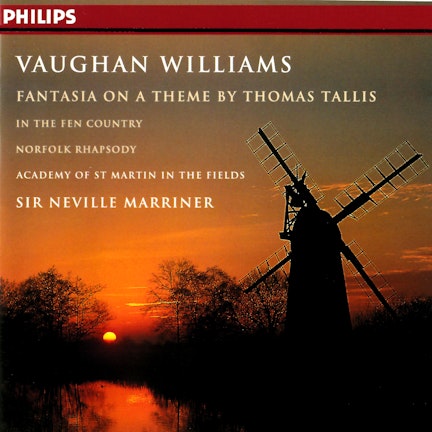
Vaughan Williams: Fantasia on a Theme by Thomas Tallis; The Wasps; In the Fen Country, etc.
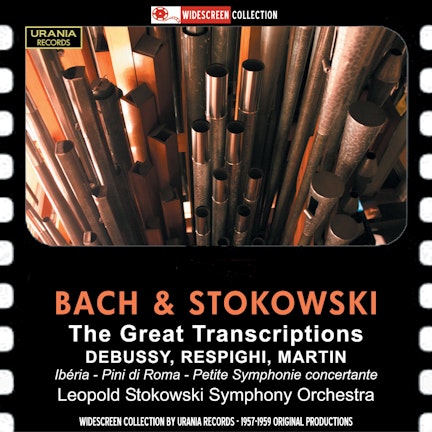
The Great Transcriptions
Contemporary Colours: New Music by Maltese Composers
Bach By Stokowski
Stokowski: Bach By Stokowski
Barber: Adagio; Symphony No.1 etc.
Estacio: Frenergy - The Music of John Esacio
Ketèlbey: Bells across the Meadows
Malipiero: Fantasie di ogni giorno, Passacaglie & Concerti