Rubbra's symphonies are unified by a technique of organic growth from 'germ' ideas, emphasizing contrasts between facets of a pervading idea rather than strict formal structures.
Composition History
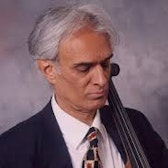
The Soliloquy for Cello and Orchestra was written for cellist William Pleeth, who became friends with Rubbra in the army during the war.
Composer Biography
Edmund Rubbra, the composer, wrote eleven symphonies, considering the form one of the peaks of compositional achievement.
Composer's Artistic Vision
Rubbra was a religious man, and all his compositions were informed by this sensibility, drawing from Congregationalism, Gnosticism, Hinduism, Buddhism, and later Roman Catholicism.
Composer's Artistic Vision
Rubbra's Symphony No. 8, subtitled 'Hommage à Teilhard de Chardin', reflects the optimistic vision of Teilhard de Chardin, a Jesuit priest and Paleontologist who synthesized evolutionary theory with Christianity.
Compositional Technique
For Symphony No. 6, all four movements started simultaneously from a basic group of four notes (E-F-A-B), which provided a fluid starting point for each movement.
Composition History
Symphony No. 6 was commissioned by the Royal Philharmonic Society and premiered by the BBC Symphony Orchestra under Sir Malcolm Sargent in 1954.