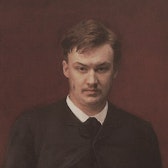
Alexander Glazunov, despite being a close friend of Tchaikovsky, belonged to a group of St. Petersburg composers who took a critical stance towards the Moscow school, attempting to unite both stylistic directions.
Composer Biography
Reinhold Glière, born in Kyiv to a wind instrument maker, studied with celebrated composers like Taneyev and Arensky in Moscow and later taught Prokofiev, Myaskovsky, and Khachaturian at the Moscow Conservatory.
Composer Biography
Vissarion Shebalin, a composer trained entirely under the Soviet system, led the Moscow Conservatory during difficult years but was dismissed as a 'formalist' during the Stalinist purges of 1948.
Historical Context
Early Russian horn music, particularly the 18th-century "Russian Hunting of Horn Players," featured ensembles of 20 to 40 members, each playing a single-pitch wind instrument to perform complex scores.
Performer Biography
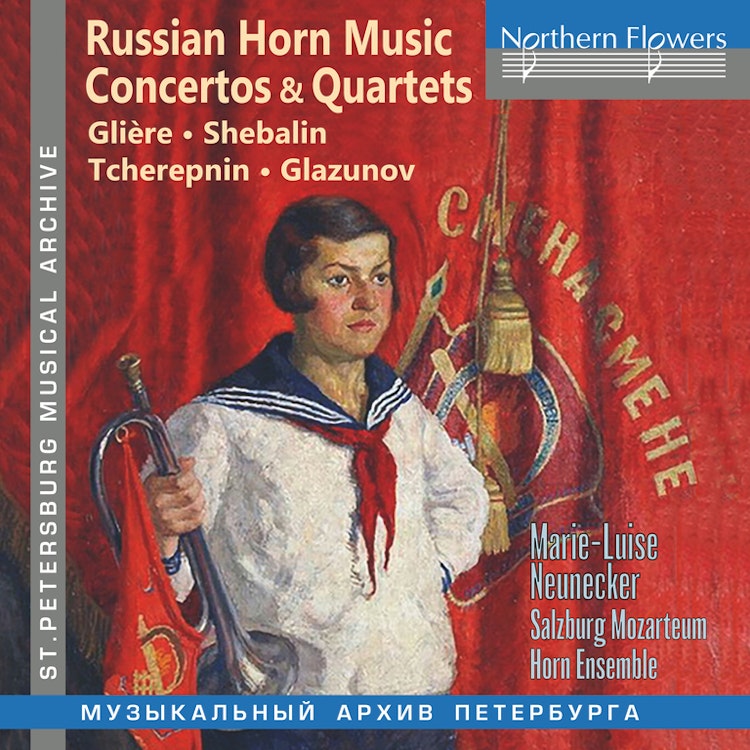
Marie-Luise Neunecker, the horn soloist on this album, has won prestigious international competitions and is known for expanding the horn repertoire through her prize-winning recordings.
Composition History
Reinhold Glière's Horn Concerto, Op. 91, composed in 1950, stood out for its traditional style at a time when contemporaries like Messiaen and Stravinsky were writing avant-garde works.
Composer Biography
Alexander Glazunov, a child prodigy, became an acknowledged composer at 17, earning praise from Franz Liszt after the premiere of his First Symphony and First String Quartet.