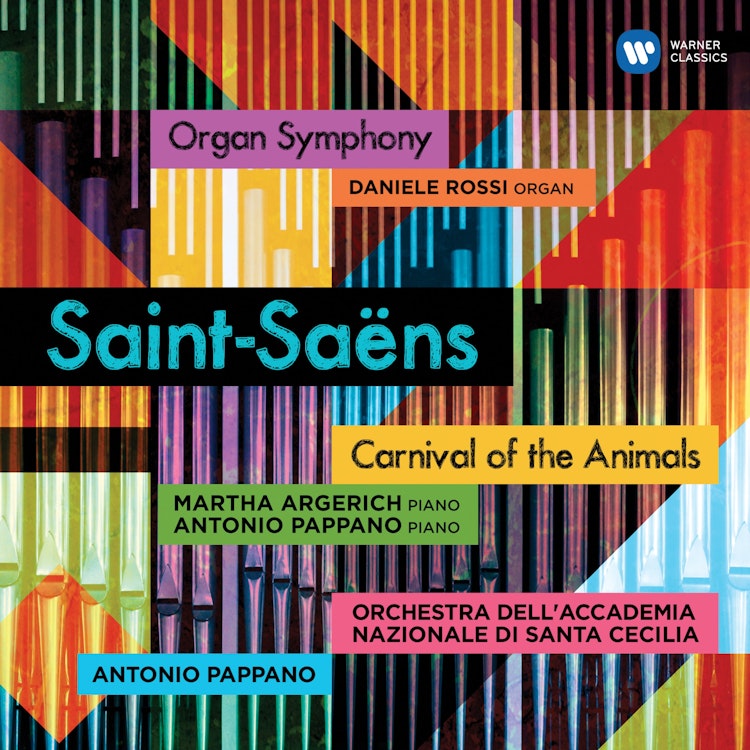
Saint-Saëns: Carnival of the Animals & Symphony No. 3, "Organ Symphony"
9/22/2017, 18 Tracks, 1:01:29
Featuring
Antonio Pappano
Daniele Rossi
Martha Argerich
Orchestra dell'Accademia Nazionale di Santa Cecilia
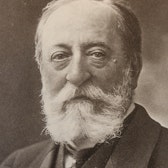
Camille Saint-Saëns
Did you know?
1/7
Notable Performances
The complete 'Carnival of the Animals' was only publicly revealed in 1922, 36 years after its earliest performances, with its premiere taking place after Saint-Saëns's death.
Composition History
Camille Saint-Saëns's two most famous works, the Third Symphony and 'The Carnival of the Animals', were composed in the same year, largely simultaneously.
Compositional Technique
Saint-Saëns's Third Symphony uses the Lisztian technique of thematic transformation, with a motto theme derived from the Dies Irae plainchant.
Compositional Technique
The 'Organ Symphony' (Symphony No. 3) features a piano part played by two pianists that requires more technical agility than the organ part, which could even be played on a harmonium.
Cultural Impact
The main motto theme from Saint-Saëns's Third Symphony's finale gained popular recognition through its use in the 1977 pop song 'If I Had Words' and as a film theme for 1995's 'Babe'.
Composer Biography
Saint-Saëns dedicated his Third Symphony to Franz Liszt, his friend, after learning of Liszt's death shortly before the symphony's publication.
Composer's Artistic Vision
Saint-Saëns initially banned the publication of 'The Carnival of the Animals' (except 'Le Cygne') until after his death, fearing its frivolity might harm his reputation as a serious composer.