Saint-Saëns's greatest contribution was perpetuating traditional French values in music during an era of little enthusiasm for instrumental works and strong foreign influence in France.
Composition History
Saint-Saëns established the Société Nationale de Musique with Romain Bussine in 1871 to promote works exclusively by living French composers, as he felt French instrumental music was neglected.
Composition History
In the last year of his life, Saint-Saëns conceived the idea of writing a sonata for each of the woodwind instruments, completing three: for oboe, clarinet, and bassoon.
Composer's Artistic Vision
Saint-Saëns confessed to violinist Johannès Wolff that he liked nothing better than chamber music, and this medium played an important role throughout his compositional career.
Critical Reception
Despite widespread recognition during his lifetime, Saint-Saëns's music suffered an eclipse after his death, being temporarily stamped as an anachronism due to changing musical fashions after two world wars.
Composition History
The Septet in E flat major Op 65, featuring the unusual combination of trumpet, strings, and piano, was written at the request of Émile Lemoine for his chamber music society, whimsically named 'La Trompette'.
Composer Biography
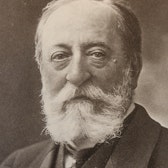
Camille Saint-Saëns, the composer, was considered the most 'complete' musician of his time by his friend and student Gabriel Fauré, excelling as a composer, pianist, organist, conductor, teacher, critic, essayist, poet, and playwright.
You might also enjoy...
Horn Trios
Martha Argerich and Friends Live from the Lugano Festival 2009