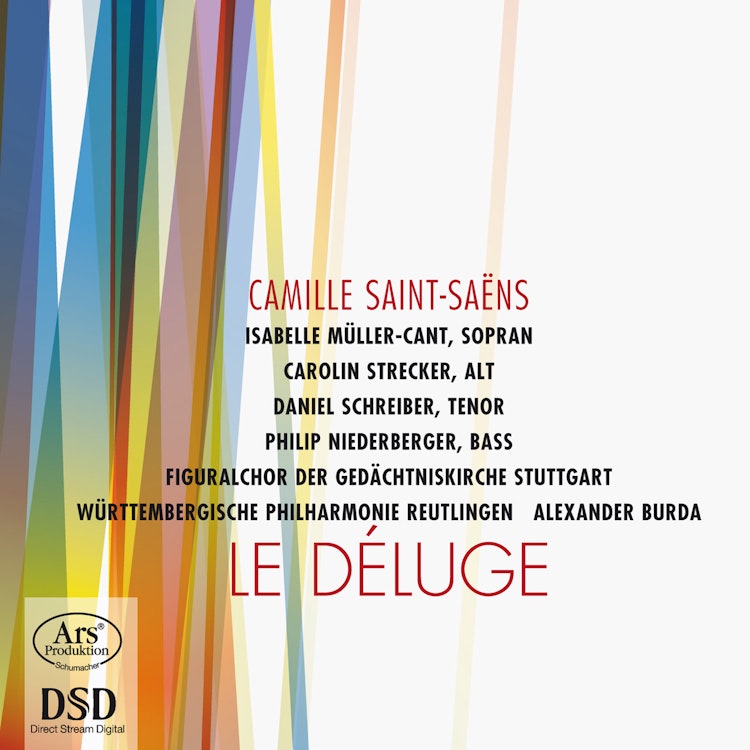
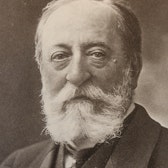
Camille Saint-Saëns spent significant time in North Africa, not only for health reasons but also to find peace for composing.
Composer's Artistic Vision
Camille Saint-Saëns believed that there is no distinct 'religious art' separate from 'secular art,' only good and bad music.
Composer's Artistic Vision
Saint-Saëns and his librettist Louis Gallet saw themselves as innovators of both opera and a new type of French oratorio.
Compositional Technique
Saint-Saëns' march "Orient et Occident" juxtaposes a 'Western' musical language in its A-section with an 'oriental' sound in its B-section.
Composition History
Camille Saint-Saëns' opera "Samson et Dalila" was originally conceived as an oratorio, and its completion was encouraged by Franz Liszt.
Performer Biography
The Württembergische Philharmonie Reutlingen, the orchestra on this album, received Germany's 'First Prize for Cultural Education' in 2009 for a project with artists with disabilities.
Critical Reception
Pope Pius X criticized the 'secular impulse' of Saint-Saëns' oratorio "Le Déluge" in 1903, possibly because it was integrated into the canon of symphonic poems.
You might also enjoy...
Tchaikovsky: Orchestral Works
Kalman: Csardasfurstin (Die) (The Gypsy Princess)
The American Album
Janáček: Glagolitic Mass; Taras Bulba; Sinfonietta; The Fiddler’s Child
Strauss: Don Juan, Op. 20, Till Eulenspiegel, Op. 28 & Salome: Tanz der sieben Schleier - Wagner: Siegfried Idyll
Puccini: Orchestral Works
Wellington's Victory, Op. 91 - Liszt: Battle of the Huns, S. 105 & Hungarian March to the Assault, S. 119
Rimsky-Korsakov: Scheherazade, Op. 35
Strauss: Alpine Symphony, Die Frau ohne Schatten & Dance of the Seven Veils
The American Album
Wagner: Orchestral Works
Ballet Music from Gounod's Faust & Delibes' Lakmé - Chabrier: España & Fête polonaise