The Malmö Symphony Orchestra (MSO), founded in 1925, is one of Sweden's leading orchestras, comprising nearly 90 musicians, and has received international recognition for its recordings.
Historical Context
The conflict depicted in Les Barbares, between Gallo-Romans and Barbarians, appealed to Saint-Saëns as an allegory for the tension between France and Germany after the Franco-Prussian War.
Performer Biography
Jun Märkl, the conductor on this album, is known for his interpretations of Germanic repertoire and French Impressionists, and has held music directorships with the Orchestre National de Lyon and the MDR Leipzig Radio Symphony Orchestra.
Composer Biography
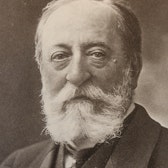
Camille Saint-Saëns, born in Paris in 1835, was an extraordinary musical prodigy who made his concert debut at age ten, offering to play any of Beethoven's 32 piano sonatas as an encore.
Compositional Technique
In his opera Ascanio, Saint-Saëns consciously imitated the style of Jean-Philippe Rameau, a French Baroque composer, in several dances to enhance the work's period character.
Composition History
The opera Les Barbares, composed in 1900-01, was intended for outdoor performance in the Roman amphitheatre in the City of Orange but was never performed there due to logistical problems.
Composer's Artistic Vision
Saint-Saëns' compositional approach evolved throughout his lifetime, from championing progressive figures like Wagner and Liszt in his youth to adopting a more conservative style rooted in French Baroque traditions in his later years.