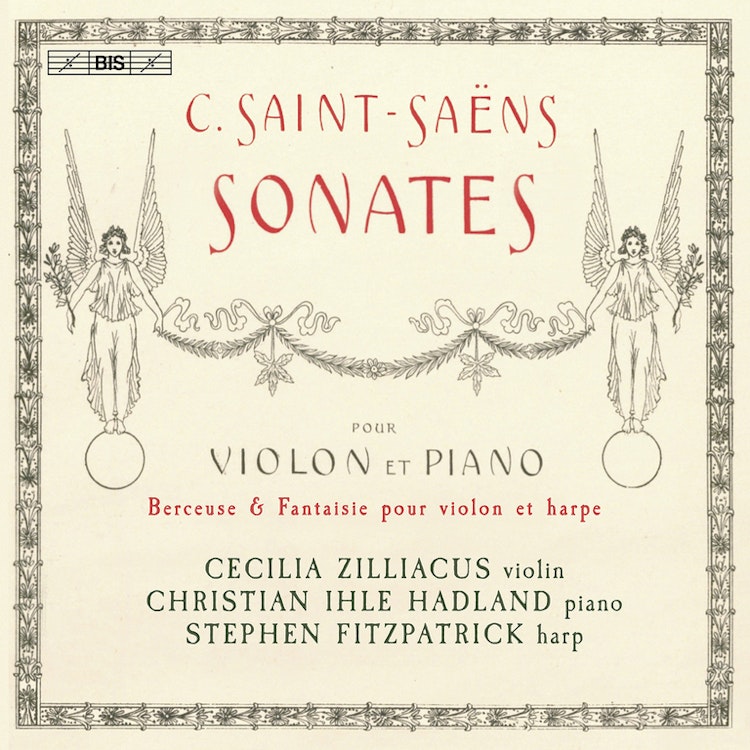
The Berceuse, Op. 38, on this recording is performed in an arrangement for harp by Stephen Fitzpatrick, rather than the original piano, with minimal changes to the chords in the middle section.
Compositional Technique
Saint-Saëns's Violin Sonata No. 1 in D minor, Op. 75, shares similarities with his 'Organ' Symphony (No. 3), including four movements with the first two and last two played without a break, and a unifying cyclic theme.
Composer's Artistic Vision
For his Violin Sonata No. 2, Saint-Saëns, who was passionate about history and archaeology, used rhythms derived from ancient Greek prosody for his themes, though he admitted they would likely go unnoticed.
Composer Biography
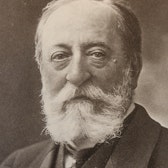
Camille Saint-Saëns was a co-founder of the Société Nationale de Musique in 1871, an organization created to support French instrumental music after the Franco-Prussian War.
Composition History
Saint-Saëns modeled his First Violin Sonata on Beethoven's famous 'Kreutzer' Sonata, as France lacked a strong chamber music tradition and he admired Viennese classical repertoire.
Historical Context
Camille Saint-Saëns described the situation for French instrumental composers in the late 19th century as one where high society admired Italian music, and the middle class preferred French opera.
Performer Biography
Stephen Fitzpatrick, the harpist on this album, was chosen by Daniel Barenboim in 2000 to be the principal harpist of the Deutsche Staatskapelle Berlin, where he still plays.
You might also enjoy...
Røta
Lost to the World
Bohemian Violin
Britten: Reflections
Penderecki: Violin Sonatas Nos. 1 and 2
Finnish Violin Music
Sgambati: Piano Quintet No. 1; Serenata Napoletana
Granados: Chamber Music with Piano
Various: Violin & Viola Sonatas
Nebbie: Music for Violin & Piano by Ottorino Respighi