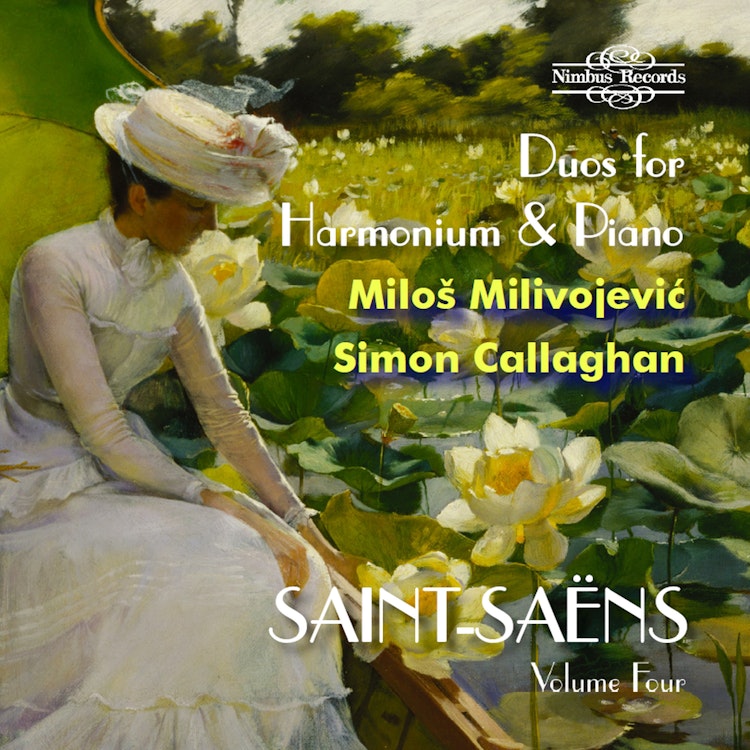
Saint-saëns Volume Four: Duos for Harmonium & Piano
2/3/2023, 12 Tracks, 1:12:56
Featuring
Miloš Milivojević
Simon Callaghan
Alexandre Guilmant
Camille Saint-Saëns
César Franck
Did you know?
1/7
Historical Context
The harmonium, an instrument developed and refined in France, gained significant popularity in the second half of the nineteenth century, leading to a large repertoire of chamber music.
Instruments
The accordion, which takes the role of the harmonium on this recording, produces sound in a nearly identical way to the harmonium, by air passing over vibrating free reeds made of metal.
Performer Biography
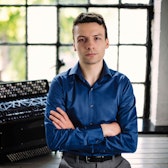
Miloš Milivojević, the classical accordionist on this album, was the first accordionist ever to win the RAM Club Prize at the Royal Academy of Music, open to all instrumentalists.
Instruments
The accordion, a more compact and portable relative of the harmonium, has become a solo concert instrument in the late twentieth century, with a growing repertoire.
Composer Biography
All three composers featured on this album—Franck, Saint-Saëns, and Guilmant—held significant posts as organists at important Parisian churches.
Composer's Artistic Vision
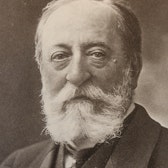
Camille Saint-Saëns once remarked, 'I produce music as an apple tree produces apples,' indicating his prolific and natural approach to composition.
Performer Biography
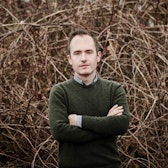
Simon Callaghan, the pianist on this album, is a Steinway Artist and a favorite at the internationally-renowned Husum Festival of Piano Rarities in Germany.
You might also enjoy...
Time of Life: Arrangments for Accordion & Piano
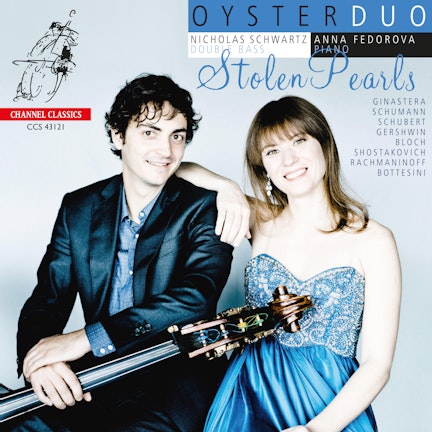
Stolen Pearls
Schubert: Die Nacht
Pan Flute and Organ
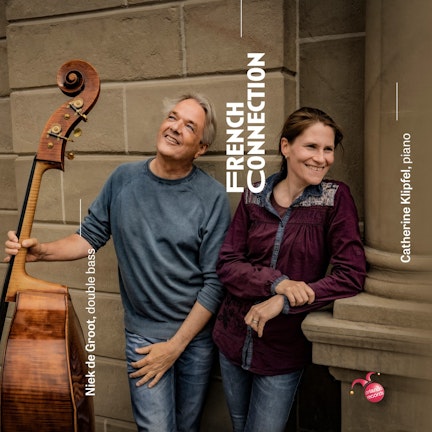
French Connection
Strohl: Solitude
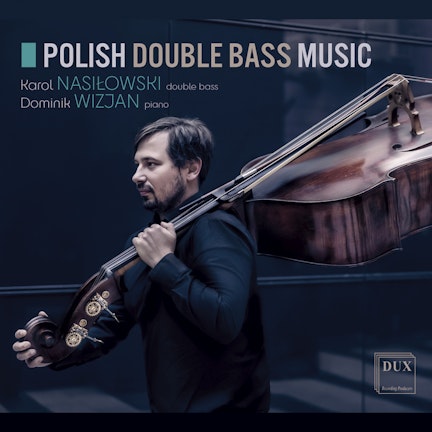
Polish Double Bass Music
Rachmaninoff: Twilight: Sonata for Cello and Piano | Lieder
Mahler: Orchestral Songs - The Organ Transcriptions