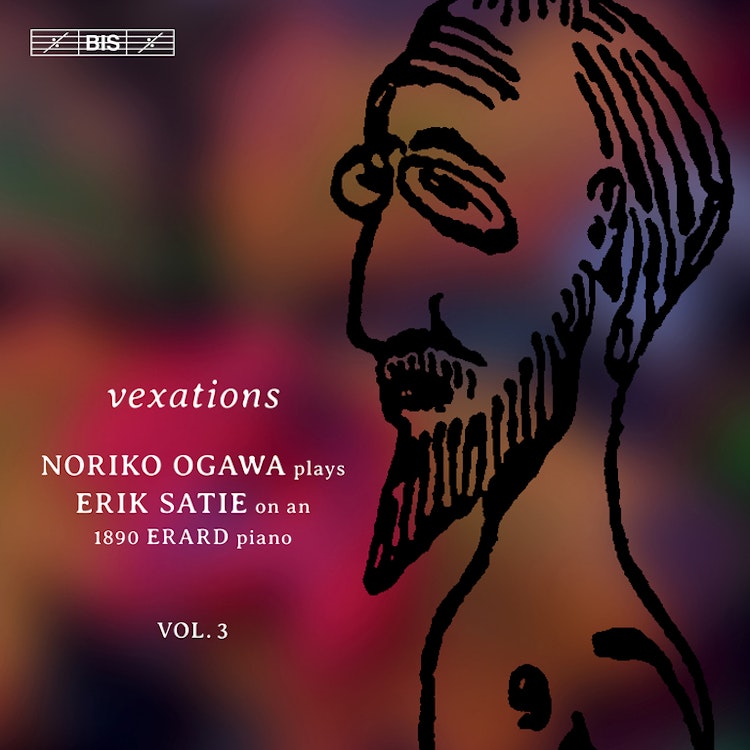
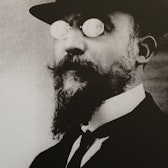
Erik Satie’s infamous composition Vexations consists of a single page of music repeated 840 times. Its first performance was organised by John Cage in 1963. For this album, pianist Noriko Ogawa offers a condensed version of 142 repeats, deliberately deviating from the conventional method of performance. She plays on an Érard grand piano dating from 1890.
Featuring
Noriko Ogawa
Erik Satie
Did you know?
1/7
Composer's Artistic Vision
Satie's scores often contain ambiguous, obscure, and ironic comments, which he told his friend, composer Henri Sauguet, were "a secret between the performer and me."
Interpretation
Noriko Ogawa chose to perform her version of Vexations in a way that might seem controversial to purists, both in terms of tempi and configuration, to include many variants of chordal harmonizations.
Compositional Technique
Vexations consists of a motif to be played 840 times, which would take between 12 and 24 hours to perform in its entirety.
Composition History
Erik Satie's Vexations was discovered among his papers after his death, with no record of any performance or intention for it to be performed during his lifetime.
Performer Biography
Noriko Ogawa, the pianist on this recording, is recognized as a Debussy specialist and has received the Art Prize of the Japanese Ministry of Education for her cultural contributions.
Notable Performances
The first known public performance of Vexations was organized by American composer John Cage in New York in 1963, with nine other pianists.
Cultural Impact
Vexations is considered a precursor to various artistic movements, including Dadaism, minimalism, and conceptual art.
You might also enjoy...
A Chloris in E Major (Arr. for Piano by William Youn)
Delibes: Lakmé: Flower Duet (Arr. Naoumoff for Piano)
Lili Boulanger: D'un vieux jardin
Deux pièces pour piano, Op. 7: II. Impression d'Automne
Fauré: Barcarolle No. 1 in A Minor, Op. 26
2 Mélodies, Op. 46: No. 2 "Clair de lune" (Arr. for Piano by Mel Bonis)