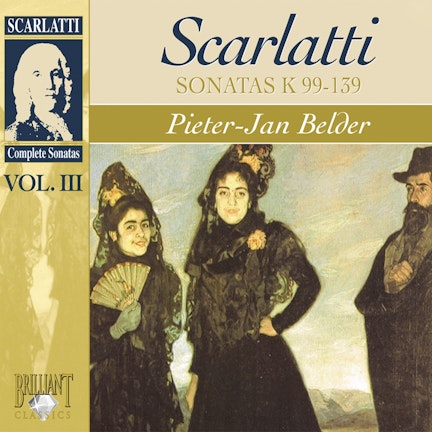
Scarlatti died in Madrid in 1757, leaving behind no fewer than 555 sonatas.
Critical Reception
Scarlatti's contemporaries, apart from a few close to him, did not have access to the best of his works, as he stopped publishing after the Essercizi, despite living for nearly twenty more years and composing most of his sonatas in old age.
Composer Biography
Domenico Scarlatti, the composer of these sonatas, was born in Naples in 1685, the same year as Bach and Handel.
Composer Biography
Scarlatti moved to Lisbon in 1719 to serve as mestre de capela to King João V and was entrusted with the musical education of his daughter, Princess Maria Bárbara.
Composition History
Scarlatti's Essercizi per gravicembalo, a collection of thirty sonatas for harpsichord, was published in London in 1738.
Compositional Technique
Many of Scarlatti's sonatas could only be played if the harpsichord was tuned using a virtually equal temperament, allowing for enormous modulation and harmonic paths that older tuning systems would have made impractical.
Composer's Artistic Vision
Scarlatti's music is characterized by its attention to texture, frequent changes of atmosphere, and the juxtaposition of short, gyrating motifs without transition.
You might also enjoy...
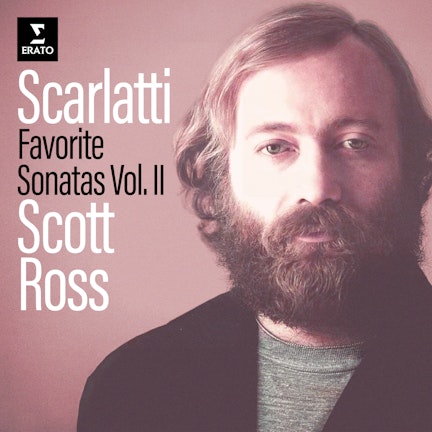
Scarlatti: Favorite Sonatas, Vol. II
Scarlatti: Complete Sonatas Vol. X, Kk. 428-475
Scarlatti 5
Scarlatti Sonatas Vol. 2
Scarlatti: Favorite Sonatas, Vol. I
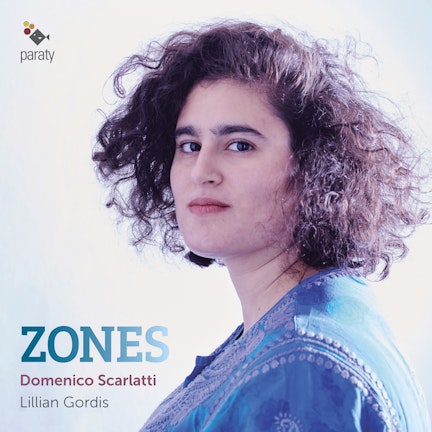
Zones
Scarlatti: The Complete Keyboard Works, Vol. 10: Sonatas, Kk. 191 - 210