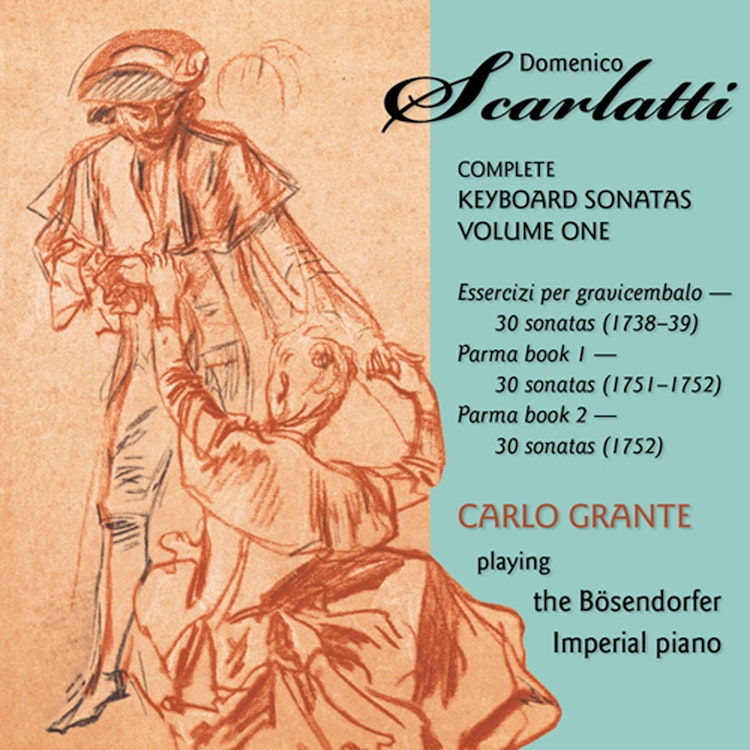
Scarlatti's 'Essercizi per Gravicembalo' (Exercises for the Harpsichord) were published due to 'Obedience' rather than 'Self-interest, nor Ambition,' as stated by the composer.
Compositional Technique
The 'Cat's Fugue' (E30), which concludes Scarlatti's Essercizi, earned its name from Muzio Clementi, with its rising theme supposedly representing a cat walking over harpsichord keys.
Composer's Artistic Vision
Scarlatti's sonatas often feature 'ingenious Jesting with Art,' aiming to train the player in harpsichord mastery rather than profound learning.
Instruments
The recording uses a Bösendorfer Imperial piano, courtesy of Eva and Paul Badura-Skoda, and was recorded in Studio Glanzing, Vienna.
Performer Biography
Carlo Grante, the pianist on this album, has begun recording a complete Scarlatti cycle and is also recording the complete solo piano works of Godowsky for Music & Arts.
Historical Context
Scarlatti spent a significant part of his career in the Iberian Peninsula, serving the Portuguese royal family and later the Spanish court, where he composed most of his keyboard sonatas.
Composer Biography
Domenico Scarlatti, the composer of these sonatas, shares his birth year, 1685, with Johann Sebastian Bach and George Frideric Handel.
You might also enjoy...
Scarlatti: Complete Piano Sonatas, Vol. 6
D. Scarlatti: Keyboard Sonatas, Vol. 7
Scarlatti: Complete Piano Sonatas, Vol. 7
Scarlatti: Complete Piano Sonatas, Vol. 14
D. Scarlatti: Complete Keyboard Sonatas, Vol. 28
Domenico Scarlatti: Keyboard Sonatas
D. Scarlatti: Complete Keyboard Sonatas, Vol. 29
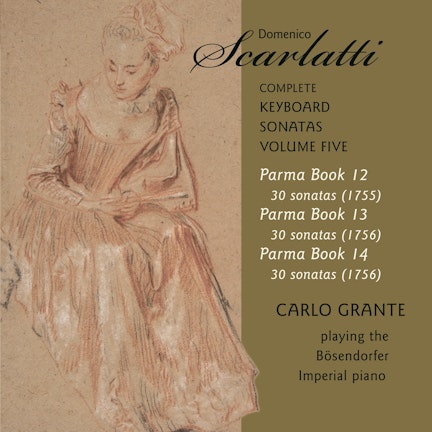
D. Scarlatti: The Complete Keyboard Sonatas, Vol. 5