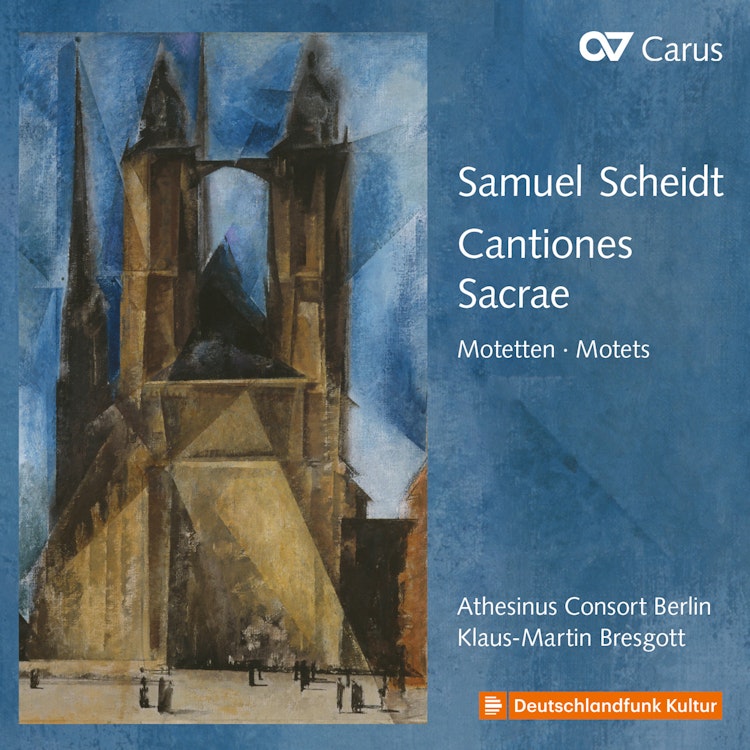
Samuel Scheidt (1587-1654) is considered one of the most important German composers of the 17th century, completing a famous trio of early Baroque composers from Central Germany.
Historical Context
Samuel Scheidt, Heinrich Schütz (1585-1672), and Johann Hermann Schein (1586-1630) formed a unique trio of composers in early Baroque Central Germany, each representing a distinct musical tradition in their respective cities.
Composer Biography
Samuel Scheidt studied for three years in the Netherlands with Jan Pieterszoon Sweelinck (1562-1621), a renowned organist, who also taught Scheidt's two younger brothers.
Compositional Technique
Unlike his contemporaries who often used five to seven voices, Samuel Scheidt chose an opulent eight-part double choir setting for his Cantiones Sacrae.
Composer's Artistic Vision
Samuel Scheidt, originally a keyboard instrumentalist, focused more on musical architecture and contrapuntal setting techniques in his vocal works, in contrast to the word-music relationship emphasized by Schütz or the Italianate affect of Schein.
Recording & Production
This album features a contemporary motet, Die Stimme meines Freundes (2016), by Berlin composer Frank Schwemmer (b. 1961), commissioned to provide a contrast to Scheidt's sonorities.
Composition History
Samuel Scheidt's Cantiones Sacrae (1620) is a collection of 38 motets, published earlier than similar collections by his contemporaries Johann Hermann Schein and Heinrich Schütz.