The pieces in "Le Nymphe di Rheno" are written for two bass viols without basso continuo, with both instruments sharing melodic and accompanying roles equally.
Instruments
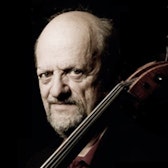
Wieland Kuijken plays a bass viol made by Nicolas Bertrand in Paris around 1690, while François Joubert-Caillet plays a modern replica by François Danger after a Bertrand instrument.
Cultural Impact
Johannes Schenck's reputation extended beyond the Rhine and the European continent, as "Le Nymphe di Rheno" was later published in the British Isles as "Select Lessons for the Bass Viol of Two Parts."
Album & Artwork
The album title, "Le Nymphe di Rheno" (The Nymphs of the Rhine), is enigmatic, as the music does not contain imitations of the river or its landscape.
Compositional Technique
Johannes Schenck's "Le Nymphe di Rheno" combines Italian sonata style movements with French suite dances, a synthesis known as "Goûts reunis."
Composition History
The title "Le Nymphe di Rheno" is explained by the dedication of the volume to Johannes Schenck's patron, the Elector Palatine Johann Wilhelm I, whose titles included "Conte Palatino del Rheno."
Composer Biography
Johannes Schenck, the composer, was born in Amsterdam and his name changed spellings (Jan, Johann, Johannes, Schenk, Schenck) to suit local usage in various countries.
You might also enjoy...
Godár: Mater
Angst der Hellen und Friede der Seelen
Dalla Gostena: Genus cromaticum. Organ Works (1599)
Visions of Joy | the Chapel of Hieronymus Bosch
Duo Piano et Orgue
Nordic Journey, Vol. 7
Du Mont: Motets à voix seule - Hayne: Requiem pour Marie de Médicis
Trombone & Organ - 400 Years of Stylistic Variety from Baroque to Modern Times , Abbie Conant & Klemens Schnorr
Vocalises
Royal Music for A Royal Instrument: Organ Music by the Duben Family