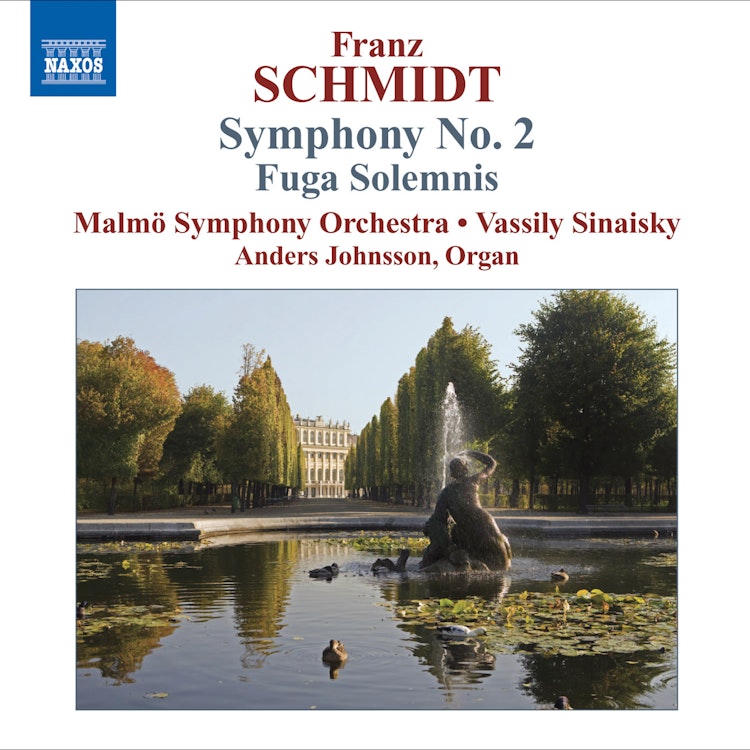
The Symphony No. 2 is unified by a single basic theme that appears in various forms throughout the work, first heard in the opening movement from divided second violins and clarinets.
Performer Biography
Vassily Sinaisky, the principal conductor, launched his international career by winning the Gold Medal at the prestigious Karajan Competition in Berlin in 1973.
Composer Biography
Schmidt studied cello with Ferdinand Hellmesberger, a member of a notable Viennese string-playing dynasty, and composition with Robert Fuchs, who also taught Mahler, Sibelius, and Wolf.
Composer Biography
Franz Schmidt, an Austrian composer, was born in Pressburg (modern-day Bratislava), where Liszt debuted as a child and Dohnányi and Bartók had early schooling.
Performer Biography
The Malmö Symphony Orchestra, founded in 1925, has received international recognition, including a Gramophone Award for their recording of Berwald symphonies with Sixten Ehrling.
Compositional Technique
The symphony is scored for a large orchestra including piccolo, three flutes, eight horns, four trumpets, and a large body of strings, with sections divided into as many as six parts.
Composition History
Franz Schmidt's Symphony No. 2 was originally conceived as a piano sonata and is considered by its editor, Karl Trötzmüller, to be the most difficult in the symphonic repertoire.
You might also enjoy...
Franck: Symphony in D Minor / Prelude, Choral Et Fugue
Draeseke: Symphony No. 3, "Tragica" - Funeral March