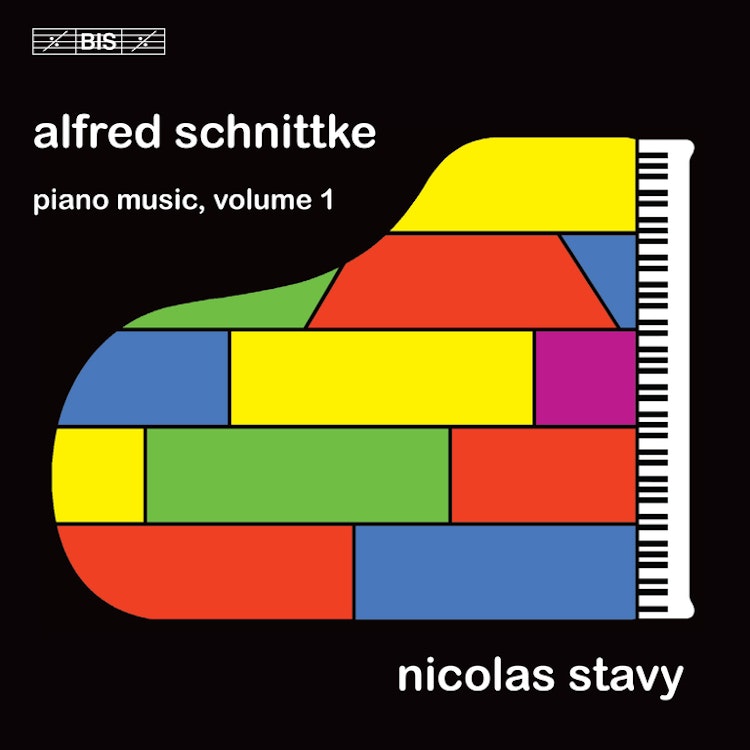
Alfred Schnittke's Little Piano Pieces (1971) were written for his six-year-old son, Andrei, who premiered six of the eight pieces in 1971.
Compositional Technique
The Prelude and Fugue (1963) by Alfred Schnittke uses twelve-tone material from two earlier works: his Quartet (1958-59) and the opera Das elfte Gebot (The Eleventh Commandment).
Composer's Artistic Vision
Alfred Schnittke admitted that the piano was not his favorite instrument, and he wrote relatively little music for it compared to his output for strings.
Composition History
Alfred Schnittke's Second Piano Sonata (1990) is dedicated to his wife, Irina, who also premiered the work in Lübeck in 1991.
Composer Biography
Alfred Schnittke's piano works on this album span from the 1950s, his "years of obscurity," to the 1990s, a period marked by both world fame and serious illness.
Compositional Technique
Alfred Schnittke's Five Preludes and Fugue (1953-54) is seen as a forerunner of his polystylistics, incorporating diverse stylistic elements from composers like Schumann, Scriabin, Rachmaninov, and Chopin.
Composer Biography
Alfred Schnittke began piano lessons relatively late, at age 15, and was largely self-taught in exploring the Soviet avant-garde and New Music trends like serialism and collage technique.
You might also enjoy...
Nikolaus Brass: Works for Piano Solo
Schnittke: Piano Sonatas Nos. 2 and 3 / 5 Aphorisms
Mompou: Piano Music - Canciones y Danzas, Preludes etc.
Williams: Digital Animation
Brian Ferneyhough: Complete Piano Music 1965-2018
Lang Lang: Live At Seiji Ozawa Hall, Tanglewood
Pièces égoïstes
SCHOENBERG / BERG / WEBERN: Piano Music
Piano Recital: Harada, Hideyo - Schubert / Liszt / Bach, J.S. / Feinberg / Mamiya
Sonatine
Liadov: Marionettes, A Musical Snuffbox & Other Piano Music
Ginastera: Danzas Argentinas, Piano Sonata 1, Suite de danzas criollas, 3 Pieces