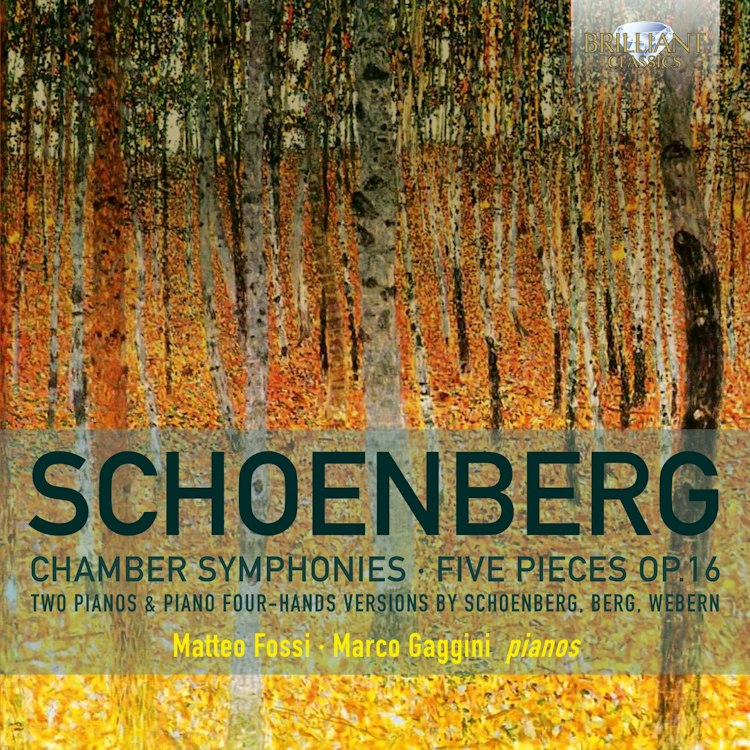
Schoenberg Chamber Symphonies, Five Pieces, Op. 16
1/1/2017, 8 Tracks, 58:58
Featuring
Matteo Fossi
Marco Gaggini
Arnold Schoenberg
Did you know?
1/7
Historical Context
A concert in Vienna on March 31, 1913, featuring Arnold Schoenberg's Kammersymphonie Op.9, caused such a commotion that it became known as the Skandalkonzert (Scandal Concert).
Composer Biography
Arnold Schoenberg's Second Chamber Symphony Op.38, begun in 1906, was not completed until 1939, after he had emigrated to the United States.
Composer's Artistic Vision
Schoenberg initially resisted adding titles to his Five Pieces for Orchestra Op.16, believing the music itself conveyed everything and that titles revealed too much.
Compositional Technique
In 'Farben' (Colors), the third of the Five Pieces Op.16, Schoenberg used Klangfarbenmelodie (tone color melody) to create melody from changing orchestral timbres and chords.
Critical Reception
During the 1913 Skandalkonzert, the audience reacted with 'hisses, laughter, and applause' and the concert was stopped before the final number after an official was assaulted.
Composer's Artistic Vision
Arnold Schoenberg believed his Kammersymphonie Op.9 marked a turning point where he found his personal composing style and solved problems posed by Richard Wagner's innovations.
Composition History
The Five Pieces for Orchestra Op.16 were composed by Schoenberg in 1909 at the request of Richard Strauss, but Strauss found them too futuristic for the Berlin audience.