Schoenberg: Pelleas und Melisande & Verklärte Nacht
10/11/2024, 18 Tracks, 1:12:30
Featuring
Rafael Payare
Orchestre symphonique de Montréal
Arnold Schoenberg
Did you know?
1/7
Composer's Artistic Vision
Arnold Schoenberg's works on this album, "Pelleas und Melisande" and "Verklärte Nacht," showcase his post-Romantic transition period, synthesizing influences from Brahms and Wagner.
Critical Reception
At the 1905 premiere of "Pelleas und Melisande," one critic recommended committing Schoenberg to an insane asylum and keeping music paper out of his reach.
Compositional Technique
Schoenberg's "Verklärte Nacht" combines the late 19th-century trends of one-movement sonata form, exemplified by Franz Liszt's Sonata in B Minor, and the one-movement symphonic poem.
Compositional Technique
Richard Dehmel, the poet of "Verklärte Nacht," praised Schoenberg's sextet, stating he forgot to follow the text's motives because he was so enthralled by the music.
Composition History
When Schoenberg composed his symphonic poem "Pelleas und Melisande" in 1902, he was unaware that Gabriel Fauré and Claude Debussy were also working on musical adaptations of Maeterlinck's drama.
Recording & Production
This album is part of a larger artistic project by Rafael Payare and the Orchestre symphonique de Montréal to explore the aesthetic of Germanic post-Romantic repertoire, following recordings of Mahler and Richard Strauss.
Composition History
Arnold Schoenberg composed "Verklärte Nacht" (Transfigured Night), Op. 4, in just three weeks in September 1899, while on vacation.
You might also enjoy...
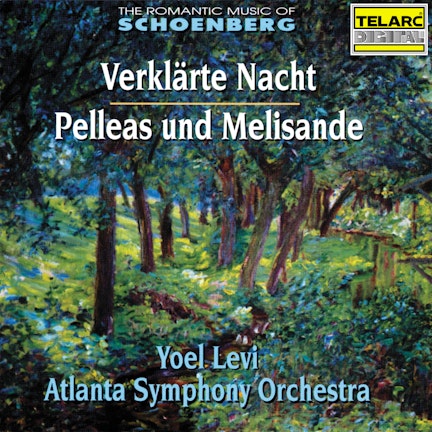
The Romantic Music of Schoenberg: Verklärte Nacht, Op. 4 & Pelleas und Melislande, Op. 5
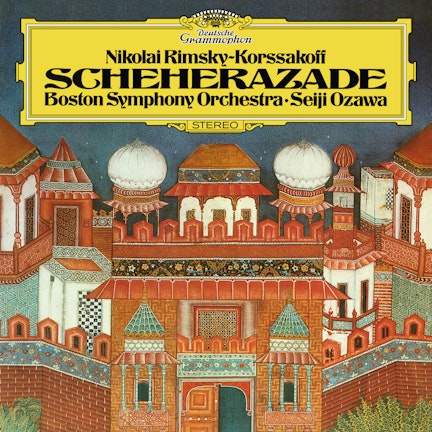
Rimsky-Korsakov: Scheherazade, Op.35 / Bartók: Music For Strings, Percussion And Celesta, Sz. 106
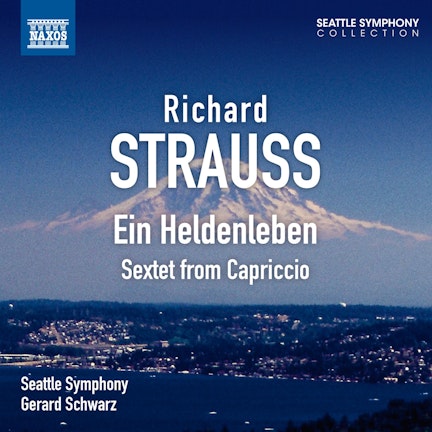
Strauss: Ein Heldenleben - Sextet from Capriccio
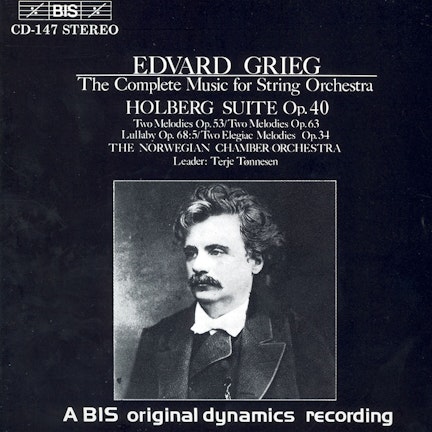
Grieg: Complete Music for String Orchestra (The)
Grieg: Music for Strings
Indies & Idols
Bernstein Conducts Barber and Schuman - Expanded Edition
Ormandy Conducts Tchaikovsky, Borodin, Barber, Vaughan Williams, Grieg and More
Bacewicz, Enescu, Ysaÿe: Music for Strings
Beethoven (arr.Mahler): String Quartet No.11 / Brahms (orch.Schoenberg): Piano Quartet No.1