Schoenberg: Verklarte Nacht / Webern: Selected Piano and Chamber Works
6/1/2006, 23 Tracks, 1:09:24
Featuring
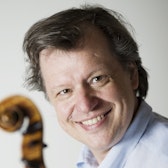
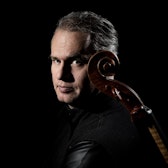
Ulf Wallin
Torleif Thedéen
Roland Pöntinen
Arnold Schoenberg
Anton Webern
Did you know?
1/7
Composer's Artistic Vision
Webern's early twelve-tone compositions, like the 'Children's Piece' and 'Piano Piece, Op. posth.', still retained experimental traits and were influenced by traditional forms like the minuet.
Historical Context
Arnold Schoenberg, Alban Berg, and Anton Webern are considered the principal figures of the Second or New Viennese School, setting the course for a new order in 20th-century music.
Compositional Technique
Anton Webern's 'Three Little Pieces for cello and piano, Op. 11' are extremely concise, with the individual pieces being only 9, 13, and 10 bars long.
Composition History
The piano trio transcription of Schoenberg's 'Verklärte Nacht' was arranged by his student, pianist Eduard Steuermann, in 1932 as a birthday present for Viennese patron Alice Moller.
Compositional Technique
Schoenberg's 'Verklärte Nacht' is a programmatic work based on Richard Dehmel's poem of the same name, which depicts a forest scene with two characters and their emotional exchange.
Composition History
Schoenberg's 'Verklärte Nacht' (Transfigured Night) was composed in just three weeks in September 1899 during a holiday with Alexander von Zemlinsky and his sister Mathilde, who later became Schoenberg's first wife.
Composer Biography
Anton Webern became Arnold Schoenberg's pupil in 1904, after studying Schoenberg's works and deciding against studying with Hans Pfitzner in Berlin.
You might also enjoy...
Xenakis - Tamaru - Matsudaira - Kanno
Cinema
Piano Music by Five Women Composers
Pergament: A Musical Miscellany, Vol. 1
Martino, D.: Solo Piano and Chamber Works
Biscardi: In Time's Unfolding
Fantasy
Tintinnabuli: Arvo Pärt & Jeroen van Veen
1948–2001: a ligeti odyssey
Música de Câmara
Honegger, A.: Cello Sonatina / Poulenc, F.: Cello Sonata / Milhaud, D.: Cello Sonata, Op. 377 (Chamber Music of the Groupe Des Six)