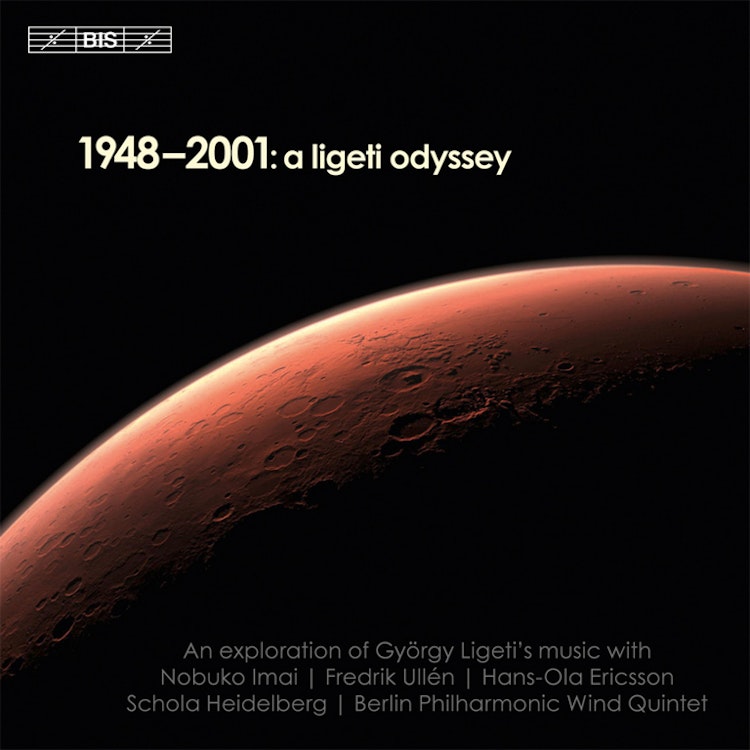
György Ligeti, a Transylvanian Jew, was acutely aware of the absurdity of aggressive behavior due to his wartime experiences, which influenced his artistic perspective.
Performer Biography
Fredrik Ullén, the pianist on this album, has performed some of the most complex and demanding solo piano literature, and his interpretations of Ligeti's music were admired by the composer.
Composer's Artistic Vision
Ligeti believed that serious and comical elements were intertwined in art, stating, "what is serious is at the same time comical, and the comical is terrifying."
Compositional Technique
Ligeti's "Volumina" for organ is his only score to use less specific "graphic" notation, allowing performer choice in pitch, rhythm, and tone color, and requiring two assistants for registration changes.
Composer's Artistic Vision
Ligeti based his music on allusions to traditions and qualities he admired, and found "everything that is direct and unambiguous is alien to me."
Cultural Impact
Stanley Kubrick used György Ligeti's music, including "Lux æterna," in his 1968 film "2001: A Space Odyssey" without the composer's knowledge or permission.
Composer Biography
After leaving Hungary during the 1956 uprising, Ligeti spent most of his time in the West and found himself at odds with the idealistic avant-garde notions of composers like Stockhausen and Boulez.
You might also enjoy...
American Classics: Samuel Barber
Schoenberg: Verklarte Nacht / Webern: Selected Piano and Chamber Works
Xenakis - Tamaru - Matsudaira - Kanno
Homs: Music for Chamber Orchestra
Arvo Pärt Collection
Suono
Koechlin: Chamber Music
J.S. Bach: Three Or One - Transcriptions by Fred Thomas