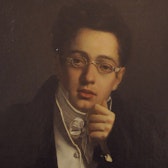
In 1814, at age 17, Schubert reluctantly worked as a teacher in his father's primary school, supplementing his income by giving private music lessons.
Critical Reception
The premiere of Schubert's Fantasy in C major in 1828 was poorly received, with a contemporary critic noting the audience gradually left and found it too long.
Composer's Artistic Vision
Schubert revered Haydn, Mozart, and Beethoven, considering them the 'Viennese Classical trinity,' with Mozart being his idol.
Composition History
The B minor Rondo and C major Fantasy were inspired by the young violin virtuoso Josef Slavík, whom Chopin admired as 'a second Paganini'.
Composition History
The three violin sonatas Schubert composed in March and April 1816 were originally designated 'Sonatas for piano, with violin accompaniment' in the 18th-century fashion.
Compositional Technique
Schubert often created expositions with three, rather than the traditional two, separate key centers in his sonata-form movements, a trait seen in the A minor Sonata.
Critical Reception
When the 1816 sonatas were published in 1836, eight years after Schubert's death, they were advertised as 'sonatinas' to appeal to the amateur market.
You might also enjoy...
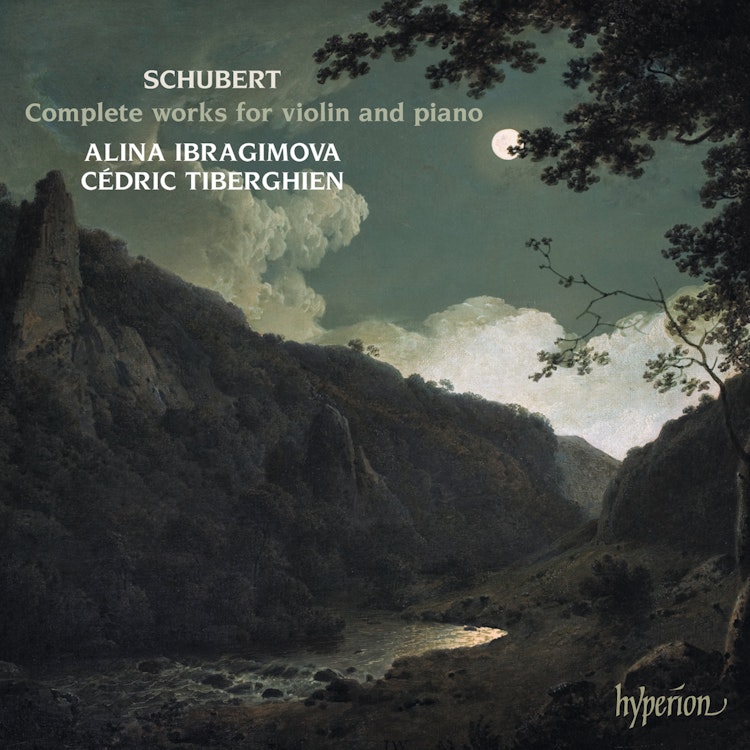
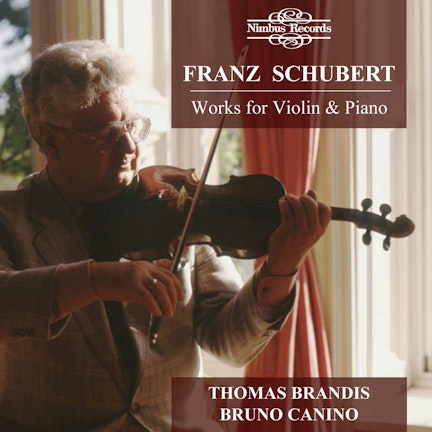
Schubert: Works for Violin and Piano
Franz Schubert: Complete Works for Violin and Piano
Schubert: 4 Sonatas for Violin & Piano
Schubert: Music for Violin, Vol. 2
Schubert, F.: Violin and Piano Music (Complete), Vol. 1
Schubert: Complete Works for Violin and Pianoforte