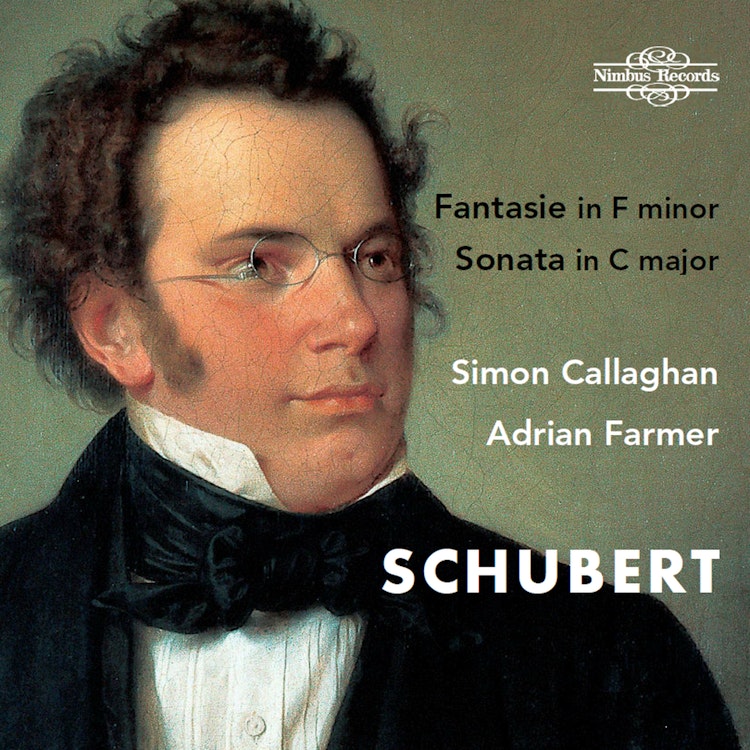
Robert Schumann, a respected advocate of Schubert's music, suspected the Sonata in C major D.812 was originally a symphony due to its orchestral texture.
Composer Biography
Schubert's fondness for the four-hand medium was influenced by Biedermeier salons, Schubertiaden, and Hausmusik, as well as his role teaching piano and singing to the Esterházy daughters.
Historical Context
The late eighteenth century saw a surge in works for multiple pianists, mostly for two players on one instrument, often for domestic use or teaching.
Composer's Artistic Vision
Schubert's F minor Fantasie fully realized his development of cyclical form and fascination with motivic links, evident in recurring themes, dotted rhythms, and major/minor oscillations.
Composer's Artistic Vision
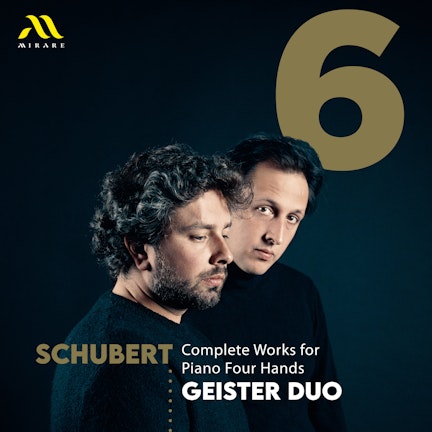
Franz Schubert significantly elevated the status of four-hand piano music, composing for the medium throughout his entire creative career.
Compositional Technique
Schubert's F minor Fantasie, despite its title, is structurally concise, sharing a through-composed, four-section design with his 'Wanderer' Fantasy.
Composition History
The Sonata in C major D.812 was orchestrated by Joseph Joachim in 1855 at Brahms's request, and performed before the piano duet version was publicly heard.
You might also enjoy...
Schubert: Grand Duo & Sonata in B-Flat for Piano 4 Hands